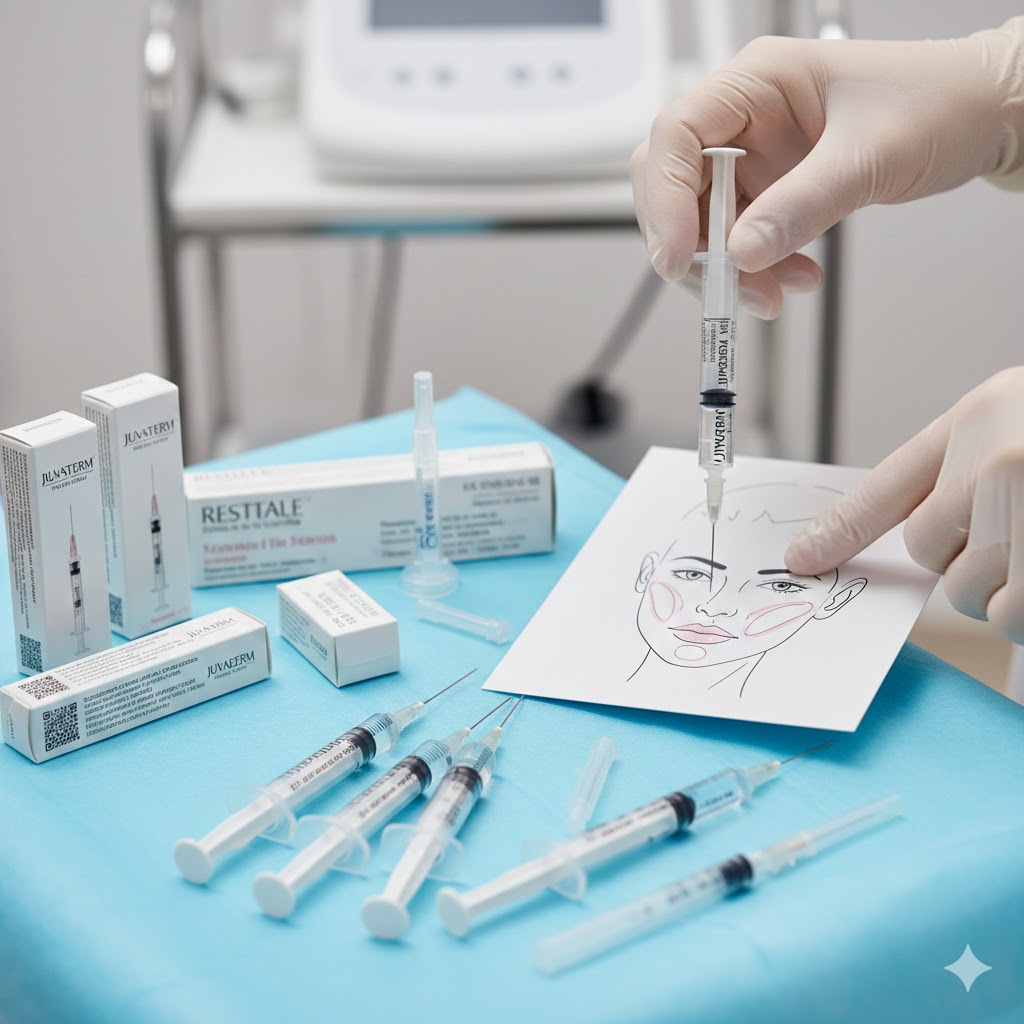
Non-surgical facial fillers provide safe volume restoration when administered by qualified medical professionals. According to a systematic literature review published in December 2024 by MDPI, involving 3,967 participants across 38 studies, procedures are considered safe with proper specialist preparation and adherence to high safety standards. Research from the Department of Plastic Surgery at Aristotle University of Thessaloniki confirms that adverse events are generally transient and mild to moderate in severity, with severe events remaining rare.
Hyaluronic acid fillers dominate treatment protocols because the substance occurs naturally in skin tissue. A September 2024 systematic review examining 5,032 patients treated with calcium hydroxylapatite revealed 21.8% experienced early reactions, 0.85% had delayed reactions, and only 0.27% faced severe complications. These percentages demonstrate safety profiles that allow most patients to proceed with confidence under proper medical supervision.
Board-certified dermatologists and plastic surgeons possess anatomical knowledge essential for avoiding vascular complications. According to research published in July 2024, vascular complications pose significant risks, including ischemia, tissue necrosis, and severe outcomes, emphasizing the importance of anatomical knowledge and careful injection techniques. Practitioners must understand facial blood vessel mapping to prevent intravascular injection.
How Long Do Facial Filler Results Actually Last?
Results duration varies by product formulation, injection depth, and treatment area. Clinical observations show tear trough filler results can last more than 24 months, especially when midface support is created, extending well beyond previously recommended 6-month maintenance intervals. Traditional manufacturer claims of 6-12 months duration require reconsideration based on imaging evidence.
An MRI study of 33 patients published in 2024 revealed hyaluronic acid filler presence in the mid-face lasting from 2 to 15 years across different products, with a 95% confidence interval of 84.47% ± 4.43%. MRI scans confirmed filler presence in all 33 patients, with no complete dissipation observed over 2 years post-injection. Among participants, 21 patients had not received injections for 2-5 years, 12 patients exceeded 5 years, and some reached 8-15 years without reinjection.
Metabolism determines individual breakdown rates significantly. Faster metabolic rates lead to quicker filler absorption, meaning active individuals notice shorter result duration. Jawline enhancement and chin augmentation with fillers typically last 12-18 months as these areas experience moderate muscle movement and accommodate firmer products. Lip fillers require more frequent maintenance because constant muscle movement accelerates degradation.
Cross-linking technology affects longevity directly. More robust fillers with tighter cross-linking persist longer but suit areas that accommodate firmer products like cheeks. Radiesse fillers stimulate natural collagen production, providing results that improve over time, typically lasting 12-18 months. Sculptra works differently by gradually stimulating collagen production over several months, with results lasting 2-3 years.
What Percentage of Patients Experience Complications?
The systematic literature review documented 8,795 total complications from facial wrinkle correction procedures, with the majority occurring after chin injections (2,852 cases), followed by lips and surrounding areas (1,911 cases), and cheeks (1,077 cases). Out of the total complications, 1,076 qualified as adverse events, including two severe cases.
Meta-analysis research found significant differences in swelling, lumps, and firmness proportions at midface, perioral line, and lip regions versus nasolabial fold sites. No significant difference appeared in pain, erythema, bruising, tenderness, itching, or skin discoloration rates between injection sites.
Common reactions resolve spontaneously within days or weeks. Swelling, bruising, and tenderness represent expected injection site responses. Studies concluded that the materials used were safe with minimal safety-related risks in 76.32% of the reviewed research. Result longevity ranged from several months to 24 months, depending on material type and quantity used.
The increase in filler treatments within minimally invasive cosmetic surgery has escalated the variety and frequency of associated side effects, ranging from mild edema to life-threatening complications. Early detection and appropriate treatment prove crucial for managing complications effectively. Many complications relate to procedural issues, emphasizing proper understanding of filler properties and facial anatomy.
How Much Investment Do Facial Filler Treatments Require?
Average filler cost in the United States reaches $750 per syringe, with prices ranging $600-$1,500 depending on treatment area, geographic location, and filler brand. Coastal markets trend toward $900-$1,200 per syringe in 2025, while Midwest and rural areas average $650-$850 per syringe.
According to the American Society of Plastic Surgeons statistics, the average cost of hyaluronic acid dermal fillers is $715, non-hyaluronic acid dermal fillers average $901, and lip augmentation with dermal fillers costs $743. Common hyaluronic acid formulations include Juvederm Ultra, Ultra Plus, Voluma, Volbella, Vollure, Restylane Lyft, Restylane Silk, Belotero, and Restylane. Non-hyaluronic acid options include Radiesse, Sculptra, Bellafill, and Renuva.
Treatment area requirements determine total syringe quantities needed. Cheek and jawline enhancement often requires multiple syringes, increasing overall investment. Subtle refinements may need only 1 syringe, while full facial balancing requires several syringes. Larger metropolitan areas charge premium rates due to higher operational expenses and practitioner demand.
Board-certified practitioners command higher fees reflecting specialized training and complication management expertise. Experienced injectors deliver better outcomes with fewer revision needs, justifying premium pricing. Since fillers last 6-24 months depending on product selection, maintenance costs require annual or bi-annual budgeting considerations.
What Treatment Areas Respond Best to Non-Surgical Fillers?
Tear troughs benefit from precise filler placement addressing under-eye hollowing. Proper technique in this delicate area prevents puffiness and maintains natural appearance. Midface volume restoration creates support that extends duration beyond isolated tear trough treatment.
Nasolabial folds represent common treatment targets for smoothing smile lines. These lines extending from nose sides to mouth edges respond well to appropriate filler selection. Treatment typically costs $500-$1,000 per syringe with results lasting 6-12 months depending on fold depth.
Cheek augmentation restores youthful contours lost to aging and volume depletion. Volumizing products like Juvederm Voluma and Restylane Lyft add definition while maintaining natural facial proportions. Cheek treatments demonstrate extended longevity because less muscle movement occurs in these zones.
Lip enhancement requires specialized technique balancing volume with natural proportions. In 2024, lip filler costs range $600-$1,200 per syringe in the United States, with most patients requiring 1-2 syringes for optimal results. Experienced injectors follow measured augmentation principles avoiding overfilled appearance.
Jawline definition and chin augmentation create structured facial profiles. These treatments accommodate firmer products providing definition without migration concerns. Results typically persist 12-18 months given moderate movement patterns in these anatomical zones.
Why Does Practitioner Selection Impact Treatment Outcomes?
The FDA approves dermal fillers for adults 22 years or older for specific uses including moderate to severe facial wrinkles and skin folds. Board-certified dermatologists and plastic surgeons possess years of medical training enabling proper technique and complication avoidance.
Anatomical expertise prevents serious vascular complications. Practitioners must possess comprehensive training in facial anatomy and distinct properties of different filler products to navigate anatomically sensitive zones safely. Understanding blood vessel locations, tissue planes, and injection depths prevents intravascular emboli and extravascular compression.
FDA Medical Device Reports show dermal filler reports received by the Agency continued increasing, resulting in 1,478 reports in 2023 and 1,179 reports through November 2024. Vascular system impairment continues as a common serious adverse event. Other frequent serious events include abscesses (1,235 cases), nodules (1,038 cases), obstruction (986 cases), and granulomas (846 cases).
The injection technique determines both immediate results and long-term satisfaction. Precise placement at appropriate depths prevents visible lumps, asymmetry, and unnatural appearance. Advanced practitioners employ cannulas for medium-viscosity fillers between tissue planes, reducing trauma and bruising compared to needle-only techniques.
Patient assessment skills enable appropriate candidate selection and realistic expectation setting. Contraindications include active skin inflammation, infection, pregnancy, breastfeeding, and a history of excessive scarring. Practitioners must evaluate medical histories, current medications, and aesthetic goals before proceeding.
What Factors Accelerate Filler Breakdown?
High-movement facial areas metabolize products faster than static zones. Lips demonstrate accelerated breakdown because constant talking, eating, and expression create mechanical stress. Cheeks and temples retain results longer, given minimal muscle activity.
Individual metabolism rates vary significantly between patients. Younger patients often metabolize fillers faster than older individuals due to higher enzymatic activity. Exercise intensity increases metabolism and blood circulation, potentially shortening filler duration through enhanced breakdown processes.
Hyaluronidase enzyme activity determines hyaluronic acid degradation naturally. Individual variations in enzyme concentrations impact filler longevity substantially. Some patients demonstrate rapid enzyme activity leading to 6-month results, while others maintain visible enhancement for 18-24 months from identical products.
Lifestyle choices influence treatment persistence measurably. Smoking accelerates collagen breakdown and reduces skin quality, diminishing filler integration and longevity. Excessive sun exposure degrades hyaluronic acid and collagen at accelerated rates, shortening the visible results. Proper skincare routine, including daily SPF 30 or higher protection, preserves results longer.
Inadequate hydration affects filler appearance because hyaluronic acid attracts water molecules. Dehydrated skin shows diminished plumping effects even with filler present. Balanced nutrition supports collagen production and skin health, extending enhancement duration through improved tissue quality.
How Do Different Filler Formulations Compare?
Hyaluronic acid fillers provide reversible volume restoration with natural integration. These products attract water to injection sites, creating plumpness and hydration. Different cross-linking densities create varied viscosities suitable for specific anatomical locations and aesthetic goals.
Calcium hydroxylapatite fillers stimulate collagen production while providing immediate volumization. Radiesse demonstrates biostimulatory properties, improving tissue quality over treatment courses. Results persist 12-18 months typically, with collagen stimulation extending benefits beyond filler presence.
Poly-L-lactic acid products work gradually through collagen induction rather than immediate filling. Sculptra requires multiple treatment sessions spaced over months for progressive enhancement. Results develop naturally over time, lasting 2-3 years as newly formed collagen maintains volume.
Polymethylmethacrylate microspheres provide semi-permanent to permanent volume enhancement. Bellafill contains tiny biocompatible beads that stimulate long-term collagen production. Results persist 5+ years, requiring careful placement given permanence concerns.
Each formulation serves distinct treatment objectives. Temporary hyaluronic acid products suit patients desiring reversibility and flexibility. Longer-lasting biostimulators benefit those seeking extended results with fewer maintenance sessions. Permanent options require extensive consultation, ensuring patient commitment and realistic expectations.
What Post-Treatment Care Optimizes Results?
Immediate aftercare prevents complications and supports optimal healing. Avoid touching, massaging, or applying pressure to treated areas for 24-48 hours post-injection. Movement and manipulation can displace products before integration occurs.
Ice application reduces swelling and bruising during the first 24 hours. Apply cold compresses for 10-minute intervals, avoiding direct ice-to-skin contact. This reduces inflammation while maintaining comfortable tissue temperature.
Sleep position affects product settling overnight. Elevate head above heart level for the first 2-3 nights, preventing fluid accumulation and asymmetric swelling. Avoid sleeping on treated sides to prevent uneven pressure distribution.
Sun exposure requires strict avoidance for a minimum of 48 hours post-treatment. UV radiation increases inflammation and prolongs recovery. Daily SPF 30+ protection becomes essential after initial healing, preserving both filler longevity and overall skin health.
Strenuous exercise requires a 24-48-hour postponement. Increased heart rate and blood pressure can exacerbate bruising and swelling. Resume activities gradually once initial inflammation resolves.
Alcohol and blood-thinning supplements increase bruising risk. Avoid consumption for 24 hours before and after treatment. Medications like aspirin, ibuprofen, and fish oil thin blood unless medically necessary.
Arnica supplementation topically and orally reduces bruising and swelling. Begin use 2-3 days pre-treatment continuing through recovery period. This natural remedy demonstrates efficacy in clinical observations.
Why Does Choosing Enfield Royal Med Spa in Viera Matter?
Specialized training in advanced injection techniques ensures precise product placement. Medical professionals with extensive dermal filler experience navigate facial anatomy safely, minimizing complication risks while maximizing aesthetic outcomes.
Access to premium FDA-approved fillers at Enfield Royal Med Spa Viera products provides treatment versatility. Comprehensive filler portfolios including Juvederm, Restylane, Radiesse, and Sculptra enable customized solutions matching individual facial structures and aesthetic objectives.
Personalized consultation processes establish realistic expectations through detailed assessment. Practitioners evaluate facial proportions, skin quality, volume loss patterns, and patient goals before recommending specific treatment plans.
Advanced imaging and assessment tools support precise treatment planning. Understanding baseline facial anatomy through comprehensive evaluation enables strategic enhancement approaching natural beauty standards.
Follow-up protocols ensure optimal result maintenance. Scheduled assessments monitor filler integration, address concerns, and plan maintenance treatments preserving consistent appearance over time.
Emergency response capabilities provide reassurance for rare complications. Immediate access to hyaluronidase for hyaluronic acid reversal and vascular complication protocols ensures patient safety remains paramount.
What Questions Should Patients Ask Before Treatment?
Practitioner certification and training background deserve thorough investigation. Request information about medical degrees, aesthetic training programs, years of injection experience, and continuing education commitments.
Product selection rationale requires clear explanation. Understanding why specific filler formulations suit your treatment areas and goals enables informed decision-making and realistic expectation formation.
Expected outcome timelines need detailed discussion. Clarify when full results become visible, how long enhancement persists, and what maintenance schedule optimizes appearance over time.
Complication management protocols merit detailed review. Understand available interventions for adverse events, emergency contact procedures, and revision policies addressing unsatisfactory outcomes.
Total cost transparency prevents unexpected expenses. Confirm per-syringe pricing, quantity estimates, consultation fees, follow-up costs, and available payment plans or package discounts.
Before-and-after portfolios demonstrate practitioner skill and aesthetic approach. Review previous patient results matching your facial structure and treatment goals assessing whether the style aligns with your preferences.
What Makes Results Appear Natural Rather Than Overdone?
Conservative volume replacement respects original facial proportions. Gradual enhancement over multiple sessions prevents sudden dramatic changes that appear artificial. Building results incrementally allows adjustment and refinement.
Anatomical understanding guides product placement following natural contour lines. Fillers placed in appropriate tissue planes integrate seamlessly rather than creating visible lumps or unnatural shapes.
Product selection matching tissue characteristics ensures appropriate firmness. Soft, mobile areas require flexible formulations while structural zones accommodate firmer products. Mismatched viscosity creates an unnatural feel and appearance.
Facial balance consideration prevents isolated augmentation creating disproportion. Treating multiple areas harmoniously maintains natural relationships between features. Isolated lip enhancement without addressing surrounding volume loss can appear disconnected.
Age-appropriate enhancement acknowledges natural aging patterns. Mature faces benefit from volume restoration in deficit areas rather than overfilling attempting dramatic age reversal. Subtle refinement appears more natural than aggressive transformation.
Movement preservation maintains expression authenticity. Overfilled areas restrict natural facial motion creating a stiff, frozen appearance. Proper technique and volume selection preserve dynamic expression while enhancing resting appearance.