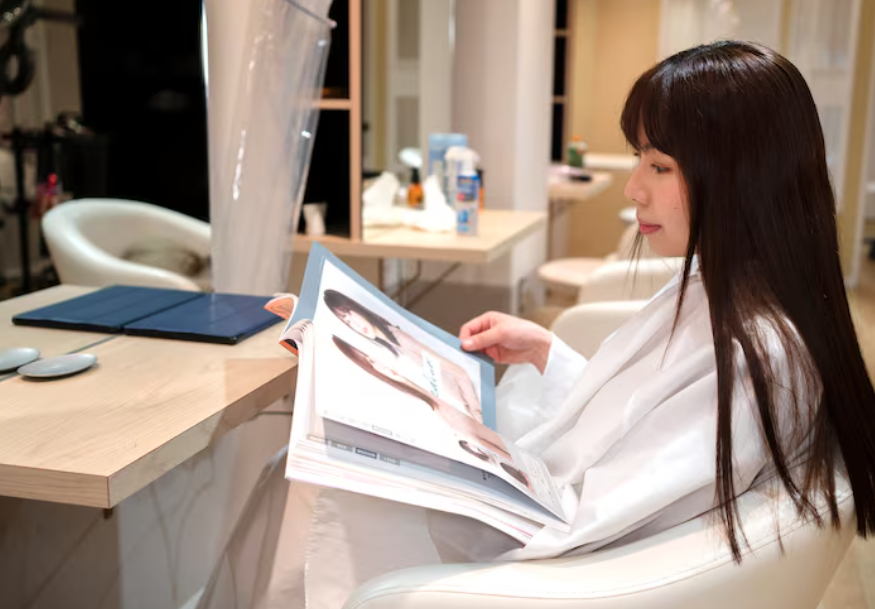
A haircut conversation can go wrong without either person being careless. The client says “lighter,” meaning a less heavy outline, while the stylist hears a question about color. The client asks for “a little shorter,” assuming an amount that has never been stated. Familiar words feel clear until two people attach different meanings to them. Writing a short brief before an appointment can expose those gaps. The brief does not replace the conversation or tell the professional how to work. It helps you arrive with an understandable account of what you want and what you still need to discuss.
Open with the reason for the appointment
Start by describing the problem or wish in ordinary language. You may want hair out of your eyes, a different overall outline, or a change that feels more visible. This opening provides context for every reference that follows. If you begin with a fashionable haircut name alone, the stylist must work backward to discover what attracts you to it. A plain statement of purpose also makes alternatives easier to evaluate. An option can be different from the original picture while still addressing the reason you booked the appointment.
Keep the opening specific enough to be useful but honest about uncertainty. “I am curious about a fringe because I want a different frame around my face” gives the conversation direction without pretending the decision is complete. “I want something better” leaves almost everything unstated. You can express a mood as part of the brief, but pair it with something visible or practical. The stylist cannot see your private interpretation of a word, so the writing should provide clues that another person can actually examine.
Distinguish wishes, boundaries, and questions
Use three short categories. Wishes describe what you would like to explore. Boundaries identify changes you are not ready to make. Questions record information you need from the stylist. A wish might concern a softer shape near the face. A boundary might concern keeping enough length for a familiar way of tying the hair back. A question could ask how a particular idea would look with your usual routine. Separating these categories prevents a tentative thought from accidentally sounding like a firm instruction.
Avoid filling the brief with technical vocabulary you have not discussed. A term found online may have a narrower meaning to a professional, or the reference may not show what its caption claims. Describe the visible detail and let the stylist explain the terminology if it matters. There is no advantage in sounding technically confident while communicating the wrong preference. A brief succeeds when the other person understands your priorities, not when it contains the greatest number of specialist expressions.
Give every picture a caption
For each reference, finish the sentence “I am showing this because…” You might be pointing out the length at the jaw, the openness of the fringe, or the amount of volume around the crown. Add a short qualification if necessary: you like the outline but do not want the color. This prevents a photograph from carrying instructions you never intended. It also makes different pictures compatible. One can describe a front view while another illustrates a detail at the back, provided the captions explain their separate jobs.
Personal previews can be useful among these references. If you explore photo-based hairstyle ideas through AIHairStyleChanger.AI, label the saved results as simulations and state the feature you are considering. A generated picture can support a discussion of a visual direction without proving that your actual hair will produce it. Keep an ordinary current photograph in the set as well. The original and the preview answer different questions: one shows the starting appearance, while the other helps express an idea you want to discuss.
Write a brief someone can read quickly
Here is a practical example in plain language: “I want a noticeable change around my face while keeping the overall length close to where it is now. In the first photograph, I like the open shape at the forehead. In the second, I like the way the ends sit around the shoulders. I do not want to copy either color. I usually spend only a short time styling my hair. Please explain which parts of these ideas could work with that routine and what you would adapt.”
That example is useful because it makes several distinctions visible. It separates the overall length from the area where change is wanted, identifies the relevant feature in each image, rules out an unintended color instruction, and asks for professional interpretation. Your version may be shorter. There is no required form or perfect wording. The important test is whether a person who has never seen your inspiration folder could understand the main request after reading it once.
Use the appointment to confirm meaning
Bring the brief, but leave space for discussion. Listen to the stylist’s interpretation and ask for clarification when a term is unfamiliar. If the professional suggests a different version of the idea, connect it back to your purpose: would the alternative still address what you wanted to change? Refer to the annotated images rather than introducing more and more examples. New pictures can be useful, but an expanding collection may obscure a question that could be resolved through a few direct sentences.
Edit the brief once for ambiguity before saving it. Circle words such as natural, easy, soft, or dramatic and ask whether each has an observable meaning in your request. You do not need to remove expressive language. Just add a concrete explanation where a misunderstanding could matter. For example, describe what easy means in your existing morning routine rather than assuming that both people share the same definition. That small revision can make the written note much easier to discuss and much less open to accidental interpretation.
Before work begins, summarize the agreed direction aloud. State the main change, the boundary you are keeping, and any adaptation discussed. Invite the stylist to correct the summary if it does not match their understanding. This final exchange turns the written brief into a shared plan. Clear communication does not guarantee that every result will match an imagined picture, but it makes assumptions easier to notice. A concise account of your wishes, a few labeled references, and a confirmed understanding provide a stronger starting point than a vague adjective attached to a beautiful photograph.
Read more : Hair Loss Recovery: How to Use Silk Press Extensions to Conceal and Heal