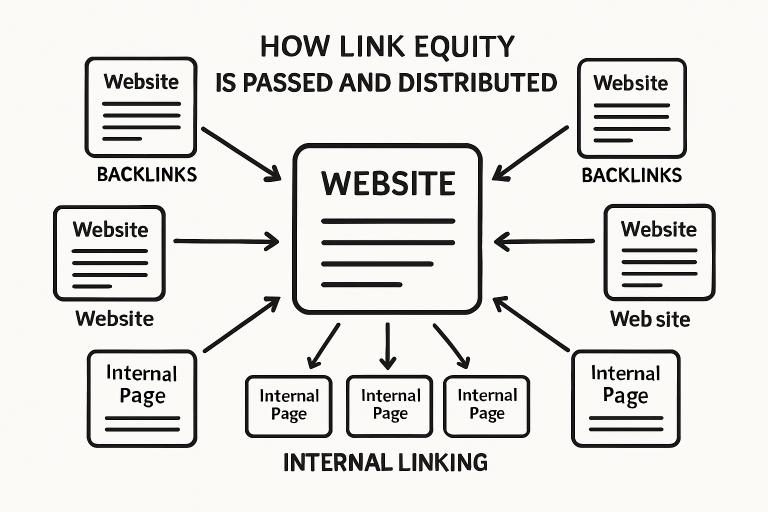
What Is Link Equity?
Link equity refers to the value and authority passed between web pages through hyperlinks, which directly impact how search engines perceive a site’s trustworthiness and relevance. Unlike early algorithms that gave equal weight to all links, modern search engines focus on context, quality, and source relevance. This shift means it’s no longer enough to accumulate links—understanding how they contribute to your site’s authority is essential. Whether you’re managing an enterprise site or a growing blog, exploring link equity in SEO can provide actionable insights on optimizing your link profile to boost search visibility.
Link equity is often termed as “link juice,” but its implications run much deeper. A link from a respected industry platform carries more weight than one from a low-authority blog. It’s not just about acquiring links, but about cultivating relationships with authority sites and ensuring your internal structure channels value where it’s needed most. This ongoing evolution means brands must adapt their strategies or risk falling behind in organic rankings.
Why Is Link Equity Crucial for Your Website?
In the digital landscape, link equity functions as a modern-day recommendation system. When authoritative sites link to your content, search engines interpret this as a strong endorsement, passing valuable trust and authority to your site. As explained in Search Engine Land’s guide to link equity, this flow of authority is central to how search engines determine which pages deserve higher rankings. According to a recent study, top-ranking pages consistently have more high-quality backlinks than lower-ranked pages, underscoring the immense role of backlinks in boosting organic visibility. Beyond higher rankings, effective link equity management improves crawling and indexing rates, ensures new pages are discovered quickly, and reinforces your website’s topical relevance. Businesses that actively manage their internal and external link profiles are better positioned to withstand algorithm updates and industry shifts.
Factors That Influence Link Equity Distribution
The worth of a link is shaped by several key elements, each contributing to how much value ultimately reaches your site:
- Authority of the linking domain: Links from established, high-traffic domains pass more equity.
- Placement: Contextual links, especially those embedded naturally within editorial content, tend to have the most substantial impact.
- Relevance: The thematic alignment between linking pages amplifies the link’s value.
- Anchor text: Descriptive and natural anchor text signals intent and relevance, helping search engines understand content relationships.
- Dofollow vs. nofollow: Only “dofollow” links pass equity directly, while “nofollow” links are helpful for healthy link profiles but transmit less ranking power.
Each of these factors impacts not only how authority is distributed, but also the context in which that equity is interpreted. Recent search engine updates reflect a stronger emphasis on quality, context, and semantically rich linking practices.
How Internal Linking Can Supercharge Your Site
Internal linking remains a powerful yet often underutilized tool for ensuring that link equity flows efficiently across your site. By thoughtfully connecting related pages, you can prioritize crucial landing pages, enhance user navigation, and establish clear topic clusters that reinforce your site’s expertise. For example, a well-linked pillar page supported by relevant subtopic articles not only keeps visitors engaged but also signals to search engines which pages are most important.
Regularly updating internal links is necessary, especially after adding new content or restructuring your website. Avoid orphaned pages—those with no inbound links within your site—as they receive little to no equity, impacting their likelihood of ranking and being discovered.
Tactics for Building High-Quality Backlinks
Building effective backlinks requires more than just outreach—it’s about creating genuinely valuable content that earns references organically. Publishing expert roundups, unique data reports, or insightful guides positions your site as a credible resource. Collaborating on whitepapers, securing digital PR placements, or hosting industry webinars are all strategies for attracting authoritative links.
Maintain ethical link-building practices by targeting reputable, relevant sites and avoiding manipulative tactics. Staying informed through reputable resources like Moz’s Link Building Guide helps ensure your efforts remain sustainable as search engine policies evolve. Ultimately, the key to successful link building lies in striking a balance between creativity and credibility. By consistently delivering content that serves both users and industry peers, you set the foundation for long-term SEO growth.
Common Pitfalls That Drain Link Equity
Missteps in link management can significantly erode your accrued authority. Frequent errors include participating in dubious link schemes, excessive reciprocal linking, relying on non-contextual guest posts, or neglecting link maintenance. Broken links—external and internal—dilute link equity and frustrate users, while overuse of “nofollow” or careless site migrations can inadvertently cut off valuable equity flows.
To avoid these hazards, conduct regular site audits, monitor outbound and inbound link health, and make sure all major pages are accessible and well-linked from both your navigation and deep content areas.
Auditing Your Current Link Equity Flow
Comprehensive link audits reveal wasted opportunities and highlight areas for strategic improvement. Identify orphaned or underlinked pages, fix broken links promptly, and review your backlink portfolio to disavow low-value or spammy entries.
Routinely revisiting your internal linking structure ensures new content is quickly integrated and older content remains visible and authoritative. Combining quantitative insights from analytics platforms with a manual review will provide the most accurate picture of your site’s link equity status.
Looking Ahead: The Future of Link Equity in SEO
As search engines increasingly harness AI and contextual analysis, the criteria for effective link equity continue to evolve. Contextual relevance, semantic connections, and natural linking patterns are becoming paramount. Brands that consistently monitor search trends and adapt their link strategies are far more likely to earn lasting authority.
Investing time in cultivating both external relationships and internal site structure not only boosts rankings but also provides resilience against ever-changing algorithms. By fostering a comprehensive understanding of how link equity works and maintaining a proactive approach, your website can secure a leading position in tomorrow’s search landscape.




2 thoughts on “How Link Equity Shapes Website Authority in the Modern SEO Landscape”