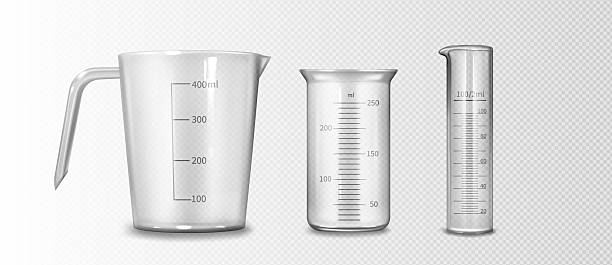
In the realm of laboratory sciences, selecting the appropriate glassware is crucial to ensuring precision and accuracy in experiments. Among the most fundamental pieces of glassware are lab beakers, which play a pivotal role in diverse scientific processes. Understanding their various types and uses can significantly enhance experimental outcomes.
Overview of Laboratory Beakers
Lab beakers are cylindrical containers with flat bottoms designed to hold liquids. They are fundamental components of any laboratory, commonly used for mixing, stirring, and heating chemicals.
Types of Lab Beakers
There are several types of lab beakers, each suited for different applications. The most common are the low-form beakers, also known as Griffin beakers, which feature a wider base and lower height. These are ideal for stirring and handling chemicals during heating processes.
Additionally, there are Tall-form or Berzelius beakers that are often used when solutions need to be stored for a longer time, as their higher sides minimise evaporation rates.
Lastly, there are specialised beakers such as the Philips beakers, which are narrower and have spouts designed for more precise pouring.
Material Considerations
Lab beakers are typically made from glass or plastic. Glass beakers, particularly those made of borosilicate, are preferred for their ability to withstand thermal stresses, making them suitable for high-temperature applications.
On the other hand, plastic beakers are more resistant to breakage, making them ideal for experiments that require handling volatile chemicals.
Choosing the Right Capacity
Beaker capacity is an important factor to consider when selecting the right glassware. Capacities can range from just a few millilitres for small-scale experiments to several litres for more extensive procedures. It is essential to choose a beaker that can contain your liquid without risk of overflow during stirring or heating.
Applications of Lab Beakers
Lab beakers are versatile tools used in various applications, from heating solutions and crystallisation processes to phasing in chemical reactions. Their wide openings make them easy to clean and use in multiple experimental settings.
Using Lab Beakers with Other Equipment
In many laboratory processes, beakers are utilised in conjunction with other equipment such as peristaltic pumps. When precision transporting of liquids is needed, these pumps work alongside beakers to ensure accurate volume measurement and transfer.
Markings and Measurements
The graduated markings on lab beakers are crucial for measuring volumes. It is important to note that these measurements are approximate and generally not suitable for precision applications, which is why more accurate instruments like measuring cylinders might be necessary for exact measurements.
Precision in Experiments
Achieving precision in laboratory experiments sometimes requires a combination of various glassware. Understanding the unique capabilities and limitations of each type, like beakers, flasks, and measuring cylinders, can help enhance the accuracy of experimental results.
Care and Maintenance of Lab Beakers
Proper maintenance of lab beakers is crucial. Regular cleaning with appropriate detergents ensures that residues do not contaminate future experiments. They should be stored carefully to prevent any potential damage, especially in cases where glass beakers are involved.
Safety Considerations
When using lab beakers, it is important to adhere to safety protocols, including wearing appropriate laboratory gear like goggles and gloves, particularly when handling hazardous chemicals. Additionally, ensure that all glassware is compatible with the chemicals being used to avoid reactions that could compromise safety.
Conclusion
In conclusion, selecting the right lab beakers involves considering several factors, from material and type to capacity and compatibility with other equipment. Ensuring that these aspects are thoughtfully addressed will facilitate more accurate and efficient experimental processes.
Whether for educational purposes or advanced scientific research, lab beakers are indispensable tools that must be carefully selected to meet the specific demands of each experiment.