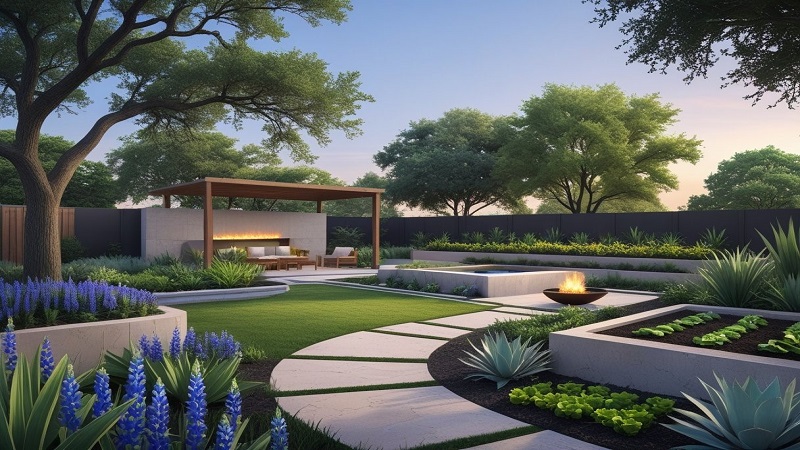
Austin’s unique climate and vibrant culture create endless possibilities for landscape design. From drought-resistant xeriscaping to lush tropical retreats, homeowners have numerous options to enhance their outdoor spaces while complementing the city’s natural beauty.
A well-designed landscape can increase property value by up to 20% while creating a personal sanctuary that reflects your lifestyle and aesthetic preferences. The key is selecting design elements that work with Austin’s specific growing conditions while minimizing maintenance requirements.
The following ideas will help transform your yard into an outdoor oasis that balances beauty with functionality, creating spaces perfect for both entertaining and peaceful relaxation throughout Austin’s extended outdoor living season.
Essential Elements of Austin Landscape Design
Successful Austin landscape design blends regional climate considerations with thoughtful material selection and strategic space planning. Creating beautiful outdoor spaces in Central Texas requires understanding both the aesthetic and functional aspects that withstand the region’s unique conditions.
Signature Plant Choices for Central Texas
Native plants form the backbone of any sustainable Austin landscape. Drought-tolerant perennials like Mexican feathergrass, black-foot daisy, and various salvias thrive with minimal irrigation.
Yucca rostrata (Big Bend yucca) makes a striking architectural statement while requiring almost no maintenance once established. These native specimens create habitat for local wildlife and adapt perfectly to the challenging climate.
Incorporating diverse shrubs such as Texas sage, agarita, and cenizo provides structure and year-round interest. These plants deliver color through foliage and seasonal blooms while demanding little water.
Ground covers like silver ponyfoot, horseherb, and sedges reduce water needs while suppressing weeds. A thoughtful plant palette balances appearance with practicality, creating gardens that look impressive without excessive maintenance.
Hardscaping Materials and Structures
Austin landscape design embraces local materials that complement the Hill Country aesthetic. Limestone, both as cut stone and boulders, adds authentic regional character to gardens while providing practical retaining walls and pathway borders.
Gravel pathways and patios offer permeable surfaces that allow rainwater to penetrate rather than run off. Common options include decomposed granite, crushed limestone, and river rock—each providing distinctive textures and drainage benefits.
Corten steel has gained popularity for edging, retaining walls, and decorative elements. Its warm, rusted patina complements native plantings and weathers gracefully over time.
Thoughtful hardscaping includes proper installation of retaining walls on sloped properties. These structures prevent erosion while creating usable terraced spaces that add both function and visual interest to challenging sites.
Creating Functional Outdoor Spaces
Effective Austin landscape design creates livable extensions of the home. Covered patios with ceiling fans enable outdoor enjoyment even during intense summer heat.
Pergolas constructed from cedar or metal provide dappled shade while supporting climbing plants like crossvine or passion flower. These structures define spaces while maintaining airflow.
Strategic fence placement creates privacy without blocking cooling breezes. Materials like horizontal cedar, metal panels, or living screens of bamboo balance security with aesthetics.
Well-designed outdoor kitchens include shade protection and proper ventilation. Durable materials like concrete countertops and stone veneer withstand exposure while complementing the home’s architecture.
Properly placed planters bring color to patios and define circulation paths. Weather-resistant containers made from ceramic, concrete, or metal house specimen plants that serve as focal points.
Incorporating Water Features and Fire Pits
Water features add cooling effects and ambient sound to Austin gardens. Simple bubbling fountains consume minimal water while masking neighborhood noise and attracting birds.
Modern irrigation systems with smart controllers and drip technology maintain landscapes efficiently. These systems adapt to weather conditions, delivering water only when necessary.
Rain gardens capture stormwater runoff, preventing erosion while creating lush planted areas. These functional depressions filter water naturally while supporting moisture-loving native plants.
Fire pits extend outdoor living seasons into cooler months. Materials like limestone, concrete or metal complement other hardscape elements while providing gathering spots during winter evenings.
Thoughtful landscape designers position water and fire features as focal points visible from indoor spaces. This creates visual connections between home interiors and the garden, enhancing both environments.
Finishing Touches and Long-Term Success
The true beauty of Austin landscape design emerges through thoughtful final elements and proper maintenance strategies. These final touches not only enhance aesthetic appeal but ensure your garden thrives in the Central Texas climate.
Landscape Lighting Ideas
Strategic lighting transforms your Austin yard from day to night, extending outdoor enjoyment hours. Pathway lighting creates safe navigation while highlighting garden features. Consider solar-powered options that store energy during Austin’s abundant sunny days.
Uplighting trees creates dramatic shadows and showcases architectural branching patterns. For entertaining areas, string lights provide ambient illumination perfect for evening gatherings. Many Austin homeowners are installing smart landscape lighting systems with programmable settings and phone controls.
The 2018 Garden Blogger’s Fling in Austin showcased innovative lighting techniques where native plants were dramatically illuminated against limestone features. Professional designers recommend using warm-toned LEDs (2700K-3000K) that complement plant colors rather than harsh white lights.
Smart Maintenance Strategies
Austin’s climate demands specific maintenance approaches for landscape longevity. Create a seasonal calendar tracking essential tasks like mulching before summer heat and pruning in late winter.
Implement drip irrigation systems with moisture sensors to conserve water while ensuring plants receive adequate hydration. Many successful Austin gardens utilize rainwater collection systems that capitalize on periodic downpours.
Group plants with similar water needs together to prevent over or under-watering issues. Regular soil testing helps determine nutrient deficiencies—particularly important in Austin’s alkaline conditions.
The team at Chickadee Gardens recommends establishing beneficial insect habitats rather than using chemical pesticides. This sustainable approach creates ecological balance and reduces maintenance needs while supporting native pollinators.
Integrating Unique Features
Distinctive elements create memorable outdoor spaces that reflect your personal style and Austin’s character. Water features provide cooling effects during hot summers while masking urban noise.
Hot tubs surrounded by thoughtful landscaping create private retreats for year-round enjoyment. Consider screening with native grasses or bamboo for privacy without sacrificing design aesthetics.
Sculptural elements made from local materials like limestone or reclaimed wood connect your landscape to Austin’s natural environment. Functional art pieces such as custom benches or gates add personality while serving practical purposes.
Vertical gardens maximize limited space and create visual interest on walls or fences. Many Austin gardeners incorporate edible landscaping, blending ornamental and productive plants in aesthetically pleasing arrangements that provide fresh herbs and vegetables.




1 thought on “Austin Landscape Design Ideas to Transform Your Yard”