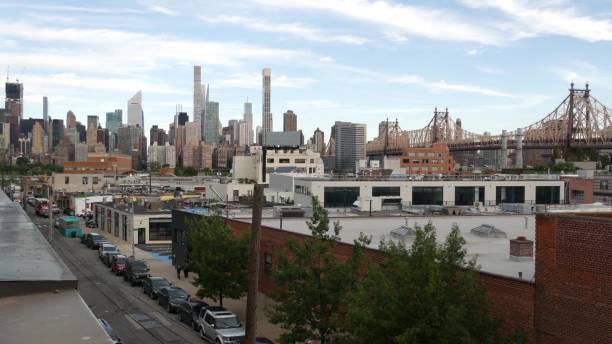
At 7:15 AM, Jackson Heights is already alive. I step off the 7 train at 74th Street, met with the hiss of steam from tamale carts and the clang of rolling metal grates. Stores unlock like old instruments warming up. This corner, dense with Desi presence, buzzes with a rhythm that doesn’t wait for anyone.
I pass Apna Bazaar. A woman in a mustard sari carries a bag of mangoes, the scent trailing her like a song. The air shifts constantly—curry, incense, diesel, and café bustelo mixing like layered tracks. Smell becomes a kind of compass. Roti griddles hiss beside bodegas selling cigarettes and guava juice. Every block speaks in spices and engine oil.
Storefronts read like multilingual poetry. Urdu script loops elegantly next to Korean hangul, Tibetan prayers above Spanish lottery posters. Queens is not melting into one—but stacked, living in layers. The noise isn’t loud. It’s detailed.
Outside a halal butcher, I speak with an older man named Bashir. His hands are stained with turmeric and time. He’s worked this same corner for over two decades. He laughs when I ask if the neighborhood has changed. “Changed? No. It’s just added more stories.” We share a smile. The sidewalk is his front porch.
Walking here feels like walking across continents without clearing customs. In less than ten blocks, I’ve passed Hindi love songs, bachata beats, and a Buddhist chant whispered from a shop altar. Jackson Heights in the morning doesn’t ease you in—it wakes you up with flavor and frequency.
Elmhurst to Corona: Layers Within Layers
Crossing into Elmhurst is a shift of tempo. The streets widen. A Chinese bakery offers taro buns and warm soy milk. Parents walk kids to school, speaking Mandarin, Thai, and Tagalog. I duck into a grocery store that smells like damp cardboard and durian. Live crabs claw at their tanks. Packages of dried mushrooms and mystery sauces fill the shelves.
The labels are mostly unreadable to me, but that doesn’t matter. The products speak for themselves—by color, by form, by story. These aisles are designed for those who know, and I’m an outsider happily drifting through.
A few blocks later, I stumble onto a Salvadoran bakery. Panes dulces line the window—bright, sugary domes. The counter lady switches from Spanish to English when she sees my hesitation. I buy one I can’t name. It tastes like vanilla and Sundays.
Soon, I cross into Corona. The smell of grilled corn hits first. A food truck has just opened, run by two brothers from Puebla. A group of teens hangs near a stoop, laughing loud, holding horchata in plastic bags tied with rubber bands.
Corona Park opens up in front of me like a pause button. I walk into Flushing Meadows. The grass is a little unkempt. Children chase pigeons near the old World’s Fair structures. The Unisphere towers overhead, a globe with rusted pride. Here, Queens reveals its bones—past dreams frozen in steel.
Families fill the benches. People speak in hushed tones under shady trees. Someone plays reggaeton softly. The city feels held in place, just for a moment. I sit briefly. I watch. Queens doesn’t perform—it just continues.
The Roosevelt Avenue Ramble: Noise, Nostalgia, and Nerve
Back on Roosevelt Avenue, the 7 train rides above me like a mechanical ceiling. The sun filters through the girders, cutting light into shapes. Below, life plays loud. A woman sells churros from a shopping cart. A man slices mangoes with lime and chili. A stand nearby blares freestyle rap on a portable speaker. A boy joins in, freestyling with bold, cracked syllables.
This stretch feels lawless and alive. Roosevelt has always been a sensory overload—but it’s also a memory trap. I first walked here as a teenager. I remember the bootleg DVDs, the Dominican barbershops, the way people danced outside clubs at 2 AM.
Every few blocks, I catch a version of that younger self—watching from behind old sunglasses, trying to act older than I was. That street taught me rhythm. Not music, but pace. Where to look. When to cross. Who to nod to.
Under a scaffold, a woman sells tamales. She doesn’t speak English. I don’t speak much Spanish. But we trade smiles and five dollars. I eat it slowly—warm masa, soft spice, fingers greasy. I lean against a rusted pole, grateful.
A sign for a taqueria has “BREAKFAST ALL DAY” in red neon. Inside, people crowd booths and counters. A mural shows fields in Oaxaca. A toddler throws rice on the floor. Nobody cares. Nobody judges. Everyone’s just surviving, selling, savoring. The sidewalks are more than passage—they’re performance.
From Willets Point to Flushing: When the Industrial Ends and the Temple Begins
I walk east toward Willets Point. The terrain shifts again. No boutiques, no bakeries—just auto body shops and spare tire lots. Puddles of oil reflect the sky. It smells like grease and rust. Signs hang half torn. The sidewalks have crumbled under years of wear. No tourists here.
A stray cat darts across a lot. Men hammer metal, yelling across the street in Spanish and Cantonese. It feels like a no-man’s land, but it’s still part of the borough’s map. Industry lives here, rough and unfiltered.
Then suddenly, it’s gone.
A few steps later, I’m in Flushing. Main Street explodes in color and motion. Signs in Mandarin crowd the sky. Duck carcasses hang in restaurant windows. Herbal medicine shops sit next to bubble tea chains. The foot traffic rivals Midtown.
There’s a purpose to the pace here. People aren’t browsing—they’re living. Grandparents walk in quiet urgency. Teenagers in school uniforms laugh into their phones. Flushing never asks for attention. It already has it.
Down a side street, I stumble on a small temple. It smells of sandalwood and soot. Inside, old men read newspapers and sip tea. No one speaks. The stillness wraps me. Outside, car horns and vendors shout. But in here, the day exhales.
This is the kind of contrast Queens offers without effort—industrial grit beside sacred calm. Not juxtaposition. Just geography.
Sunset in Astoria: Calm, Café, and the Unexpected Familiar
After a long subway ride and some mental recalibration, I end my walk in Astoria. The neighborhood breathes differently. The streets are calmer, tree-lined, more residential. A breeze carries the scent of grilled lamb and lemon.
Astoria isn’t quiet, but it hums. I walk past hookah bars, Greek bakeries, and hip cafes with laptops glowing in window seats. I sit at a corner café and order a strong coffee. My legs ache. I welcome the chair like an old friend.
A group of elderly men debates soccer in Greek. A couple nearby clinks glasses of wine. The table I sit at is slightly wobbly, but it holds. The surface is scratched from years of elbows, coffee mugs, and quiet conversations. It feels like every piece of restaurant furniture here has its own small biography.
I sip slowly. I reflect.
Queens doesn’t show itself in grand gestures. It tells its story block by block, in small smells, overheard phrases, and cracked sidewalks. You don’t “do” Queens. You walk through it. And every few blocks, it quietly rewrites who you think you are.
What strikes me most is how fast identity morphs here. In Jackson Heights, I felt like a foreigner. In Corona Park, a guest. On Roosevelt, a local. In Flushing, a student. In Astoria, just another neighbor.
My feet ache, but I wouldn’t change a step.
Walking through Queens isn’t about endurance. It’s about recognition. The borough doesn’t ask to be understood—it just asks you to keep moving, keep noticing.
And somewhere along that walk, you realize: the borough was never trying to impress you. It was inviting you to listen.