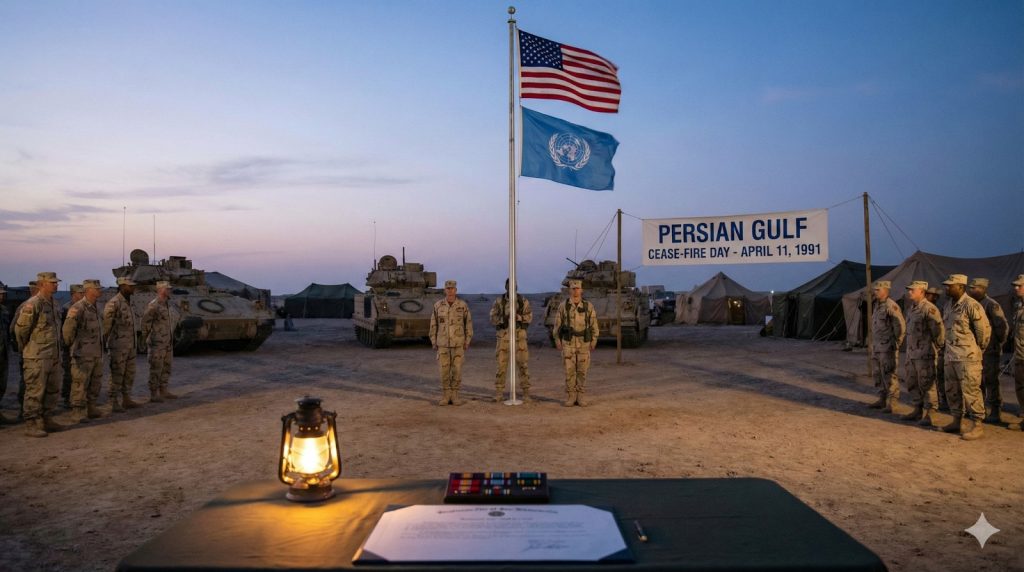
Persian Gulf Cease-Fire Day is a commemorative observance that marks the formal end of major combat operations in the Persian Gulf War. Observed annually on April 11 in the United States, the day recognizes the cease-fire agreement that took effect in 1991 following months of conflict in the Middle East.
While the war itself was relatively short, its global impact and the service of those involved continue to hold historical significance. The observance provides an opportunity to reflect on the conflict’s conclusion, honor those who served, and acknowledge the broader consequences of the war. Symbolic gestures, such as the use of thin ribbons in memorial contexts, are sometimes associated with remembrance and reflection during military observances.
What Was the Persian Gulf War?
The Persian Gulf War began in August 1990 when Iraq invaded Kuwait, prompting a swift international response. A coalition of forces, led by the United States and authorized by the United Nations, was formed to address the invasion and restore Kuwaiti sovereignty. After months of military buildup and diplomatic efforts, combat operations began in January 1991.
The conflict was characterized by extensive aerial bombardment followed by a brief ground campaign. By late February 1991, coalition forces had achieved their primary objectives, leading to a suspension of active combat.
Although fighting ceased quickly, negotiations and formal agreements were still required to officially conclude hostilities. This period between the end of combat and the formal cease-fire is central to understanding the significance of Persian Gulf Cease-Fire Day.
What Did the Cease-Fire Agreement Represent?
The cease-fire agreement that took effect on April 11, 1991, marked the official end of major military operations in the Persian Gulf War. It outlined conditions for Iraq, including disarmament obligations and compliance with international inspections. The agreement was intended to prevent further conflict and establish terms for regional stability.
Unlike the end of combat operations, which occurred earlier, the cease-fire represented a formal and legal conclusion to the war. This distinction is important because it underscores the role of diplomacy and international oversight in ending armed conflict. Persian Gulf Cease-Fire Day specifically commemorates this formal resolution rather than the last day of fighting.
Why Is Persian Gulf Cease-Fire Day Observed?
The observance serves several purposes. First, it recognizes military personnel who served during the conflict, many of whom faced challenging conditions in unfamiliar environments. Second, it offers a moment to reflect on the war’s geopolitical consequences, including its long-term effects on regional dynamics and international relations.
Persian Gulf Cease-Fire Day also acknowledges the transition from active conflict to post-war responsibilities, including humanitarian efforts, rebuilding, and monitoring compliance with the cease-fire terms. By focusing on the cease-fire rather than the combat itself, the observance emphasizes resolution and the importance of ending hostilities through formal agreement.
Symbols and Remembrance Practices
Military observances often involve symbols that convey remembrance, respect, and reflection. While Persian Gulf Cease-Fire Day is not as widely marked as some other military holidays, it may still be recognized through educational programs, ceremonies, or displays of symbolic items. Ribbons, flags, and memorial materials, along with personalized tributes such as military frames, are commonly used to represent service and sacrifice across various observances.
Symbols help translate complex historical events into accessible forms of remembrance. They serve as visual reminders of shared history and provide a way for communities to acknowledge military service without focusing solely on combat. These practices support collective memory and encourage reflection on the human dimensions of conflict.
How Is the Day Recognized Today?
Persian Gulf Cease-Fire Day is primarily recognized in educational, military, and governmental contexts rather than through large public celebrations. Schools, museums, and veterans’ organizations may use the day to highlight lessons from the Persian Gulf War and discuss its place in modern history.
Recognition often focuses on awareness rather than ceremony. This approach reflects the relatively recent nature of the conflict and the ongoing discussions surrounding its legacy. By maintaining a lower-profile observance, the day encourages thoughtful engagement rather than spectacle.
What Is the Broader Importance of Cease-Fire Observances?
Cease-fire observances play an important role in how societies remember conflict. They shift attention away from battle milestones and toward the processes that end wars. This perspective highlights the value of negotiation, international cooperation, and accountability in resolving armed disputes.
Persian Gulf Cease-Fire Day fits within this broader framework by emphasizing closure and reflection. It encourages consideration of how wars conclude and what responsibilities remain afterward. This focus supports a more comprehensive understanding of military history that includes both action and resolution.
Remembering Resolution and Reflection
Persian Gulf Cease-Fire Day serves as a reminder that the end of a conflict is marked by the cessation of fighting and also by formal agreements that shape what comes next. By commemorating the cease-fire, the observance honors those who served while reinforcing the importance of diplomatic resolution.