Table of Contents
- Assess Business Requirements
- Evaluate Hardware Specifications
- Consider Energy Efficiency
- Plan for Future Growth
- Prioritize Security Features
- Review Support and Warranty Options
- Budget and Total Cost of Ownership
- Conclusion
Building an effective IT infrastructure starts with the proper hardware, and in many cases, tower servers offer an ideal solution for small to mid-sized businesses. These servers are prized for their flexibility, upgradability, and suitability for organizations not yet ready for extensive rack- or blade-server environments. When choosing a tower server for small IT teams, it’s critical to evaluate factors that go far beyond upfront hardware costs.
A well-chosen tower server can enhance productivity, reliability, and even security within your business. The decision affects everything from daily workflow performance to the scalability of your entire operation. By looking at your organization’s unique needs and matching them with the right technology, you can prevent future headaches, minimize downtime, and improve cost efficiency.
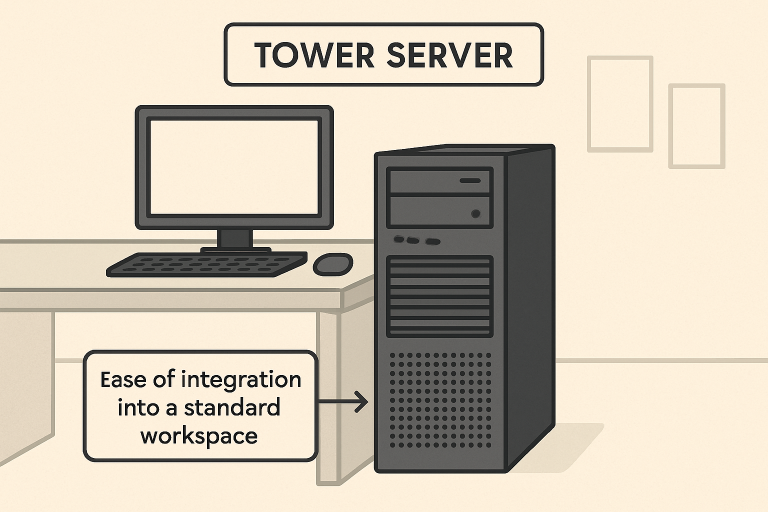
Another advantage of tower servers is their ease of integration into existing office environments without the need for dedicated server rooms. They excel at handling core functions, including file sharing, application hosting, and email services. As your requirements evolve, many tower servers offer seamless expansion capabilities so you don’t have to worry about outgrowing your hardware investment too soon.
Assess Business Requirements
Begin your selection process by conducting a thorough assessment of your current and anticipated needs. What core business applications will the server support? Is the focus on secure file storage, running databases, managing email traffic, or supporting virtualization for multiple users? Pinpointing these details helps refine the technical specifications required. For growing businesses, consider not only today’s needs but also where your IT demands may be in the next three to five years.
This careful upfront analysis helps ensure a better match between your workload and the server’s capabilities, avoiding both overspending on unnecessary resources and an underpowered system that can hinder productivity.
Evaluate Hardware Specifications
When evaluating prospective tower servers, focus on these critical hardware attributes:
- Processor (CPU): For modern business needs, a multi-core CPU is recommended, especially if you plan to run several applications or support virtual environments. Higher core and thread counts can significantly boost multitasking and responsiveness.
- Memory (RAM): Adequate RAM is essential for reliable performance. Insufficient memory can cause bottlenecks and slowdowns. Look for a model that allows for easy RAM upgrades.
- Storage: Decide between SSDs (Solid-State Drives) for speed and responsiveness, or HDDs (Hard Disk Drives) for cost-effective, high-capacity storage. Many businesses opt for a hybrid approach to balance costs and performance. According to Entrepreneur, choosing the proper data storage solution is critical for business efficiency, and understanding the trade-offs between SSDs and HDDs can help ensure you meet both performance and budget needs.
- Expansion Options: Expansion slots let you add functionality such as improved networking, additional storage, or graphics processing. Invest in a model that provides room for future growth.
Consider Energy Efficiency
Power consumption is a crucial concern for most businesses, especially those with limited budgets or green initiatives. Energy-efficient tower servers often include high-value features such as optimized power supplies, low-wattage processors, and smart power management settings. Over the lifecycle of the hardware, reduced energy usage lowers both direct expenses and environmental impact.
Plan for Future Growth
A wise investment in server infrastructure anticipates future scaling needs. Look for tower server models with easily accessible bays for additional drives, slots for extra RAM, and support for CPU upgrades. If you foresee your team growing or your applications becoming more demanding, scalable architecture ensures you can extend the server’s life without having to replace it entirely.
Full consideration of upgradability helps safeguard your investment and streamlines IT operations as your business grows or services expand.
Prioritize Security Features
Fault-tolerant and secure servers are no longer just a luxury—they are a necessity in a world of increasing cybersecurity risks. Modern tower servers often feature hardware-level encryption, support for secure boot, advanced BIOS protection, and physical security features such as lockable drive bays.
- Physical Security: Prevent unauthorized physical access to the hardware, especially in smaller office environments.
- Network Security: Choose servers with built-in firewall protection and intrusion detection systems to guard data in transit.
- Data Protection: Onboard encryption and backup support can keep business-critical information safe from loss or theft.
Review Support and Warranty Options
Vendor reputation and ongoing support are integral to maintaining uptime. A comprehensive warranty, plus options for next-business-day replacement and 24/7 technical support, protects your operations and streamlines recovery in the event of issues. Before committing, review user feedback on vendor support responsiveness and satisfaction.
Well-established brands frequently offer extended warranty plans, proactive monitoring, and priority repair or replacement services, all of which add value to your server investment.
Budget and Total Cost of Ownership
While it can be tempting to select the least expensive hardware, a low upfront cost may translate to higher maintenance or upgrade expenses over the server’s lifecycle. Evaluate the total cost of ownership (TCO), factoring in power consumption, anticipated repairs, upgradeability, licensing fees, and downtime costs.
Sometimes, a slightly higher initial investment buys much greater returns in reliability, performance, and long-term savings. Consider both immediate and projected expenses when planning your IT infrastructure budget.
Conclusion
The process of selecting a tower server should be guided by a thorough understanding of your current and future business needs, rigorous evaluation of hardware and security specifications, a focus on ongoing vendor support, and a careful assessment of long-term costs. By following these best practices, your business can benefit from a reliable, secure, and scalable server solution that keeps your operations efficient — both now and into the future.



