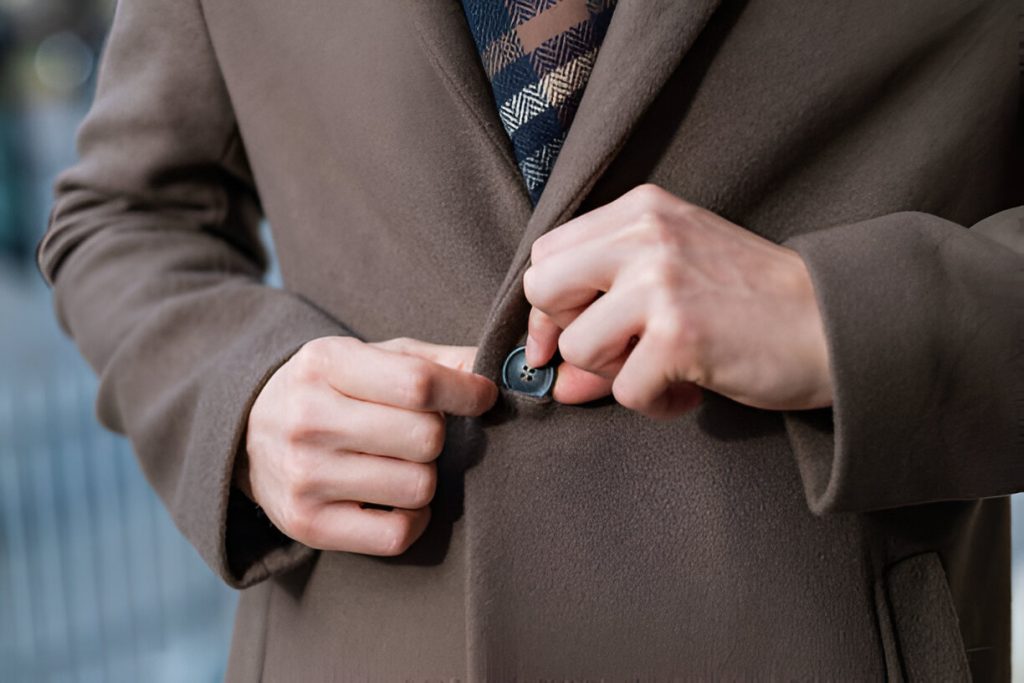
In an age of fast fashion and mass production, it’s easy to overlook the subtle elements that distinguish an exceptional men’s coat from a mediocre one. While most buyers focus on color, cut, and price, the true quality of a coat reveals itself in the details many never notice: the buttons, the lining, the internal construction. These forgotten elements are where craftsmanship lives, where durability is determined, and where the difference between a coat that lasts two seasons and one that endures decades becomes apparent.
The Architecture of Buttons
Buttons might seem purely functional, but they’re the jewelry of mens coats. High-quality coats feature buttons made from natural materials like corozo (made from tagua palm nuts), genuine horn, or mother-of-pearl. These materials age beautifully, developing unique patinas over time rather than cracking or fading like plastic alternatives. The weight of a real horn button feels substantial in the hand, providing a satisfying tactile experience every time you fasten your coat.
The attachment method matters equally. Hand-sewn buttons with a thread shank allow the button to sit properly when fastened, preventing fabric stress and premature wear. Look for reinforced button stays on the reverse side—small pieces of fabric or leather that distribute tension across a wider area. This invisible detail can mean the difference between buttons that stay secure for years versus those that pop off after a few months of regular wear.
Even button placement follows careful consideration in well-made coats. The stance—where the top button sits—determines how the coat frames your body. Master tailors position buttons to create the most flattering silhouette while ensuring comfortable movement. The seemingly simple two-button versus three-button choice dramatically affects both aesthetics and functionality.
The Hidden World of Lining
Lining serves multiple purposes beyond the obvious role of helping you slide the coat on easily. Quality lining protects the outer fabric from body oils and perspiration, extends the coat’s life, and provides an opportunity for personal expression. Traditional Bemberg rayon or silk linings breathe better than synthetic alternatives, preventing that clammy feeling common in cheaper coats.
The construction method of lining attachment speaks volumes about overall quality. Full lining should be set with enough ease to move independently from the outer shell, preventing tears when you reach or stretch. Half-lined or butterfly-lined coats require even more skill to execute properly, as exposed internal seams must be finished immaculately. Some premium men’s coats feature contrast piping along the lining edges—a detail that requires additional labor but provides subtle sophistication.
Consider also the functional elements within the lining. Interior pockets should be reinforced at stress points and positioned for both accessibility and balance. A weighted chain sewn into the bottom hem of longer coats helps them hang properly in wind. These touches might go unnoticed by casual observers, but they significantly enhance the wearing experience.
Internal Construction: The Invisible Framework
The canvas interlining, invisible between the outer fabric and lining, determines how a coat holds its shape over time. Floating chest pieces in high-end coats are hand-padded and shaped, creating natural drape and structure that improves with age. This contrasts sharply with fused interlinings that are simply glued in place and eventually bubble or separate.
Shoulder construction deserves particular attention. Hand-padded shoulders maintain their shape without feeling stiff or artificial. The amount of structure varies by style—soft-shouldered Italian coats differ vastly from structured British military-inspired designs—but quality construction ensures the shoulders never collapse or develop dimples.
Seam finishing throughout the coat indicates overall build quality. French seams, felled seams, or bound seams prevent fraying and add durability. Hand-picked stitching along lapels and pocket edges, while subtle from a distance, creates depth and definition that machine stitching cannot replicate. These techniques require skilled artisans and additional time, explaining why truly well-made coats command higher prices.
The Mark of True Craftsmanship
These forgotten details collectively create what connoisseurs call “hand”—the way a garment feels, moves, and ages. A coat with proper internal construction and quality components develops character over time rather than simply wearing out. The buttons develop a unique sheen, the lining molds to your movement patterns, and the canvas interlining shapes to your body.
Understanding these hidden elements transforms how you evaluate and appreciate men’s coats. Next time you’re shopping, take a moment to feel the weight of the buttons, peek inside at the lining construction, and run your hands along the internal seams. These forgotten details tell the true story of a coat’s quality and longevity, revealing the human craftsmanship that elevates mere clothing into something approaching art.