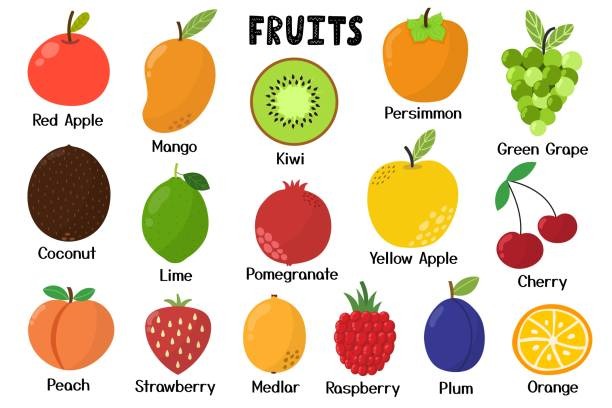
Building a strong English vocabulary becomes easier when you learn commonly used food terms. A good place to start is with fruit names, which are often used in daily conversations, shopping, and even school lessons. This list is grouped by fruit categories to help you understand and remember them better.
Citrus Fruits
These fruits are juicy and tangy with a refreshing, often sour taste. They are rich in vitamin C.
Orange
A sweet citrus with bright orange skin and juicy sections perfect for snacking or juicing.
Lemon
This sour yellow fruit is used to add zest to drinks, sauces, and savory dishes.
Lime
Small and green, it adds a sharp flavor to food and is often used in refreshing drinks.
Grapefruit
A large fruit with pink or red pulp that tastes bittersweet and is usually eaten fresh.
Mandarin
A small, sweet citrus that’s easy to peel and a favorite among children.
Tropical Fruits
These fruits grow in warm climates and are known for their bold flavors and juicy textures.
Mango
Bright yellow-orange inside, this smooth and sweet fruit is loved in many desserts and drinks.
Pineapple
Its rough skin hides a juicy, golden flesh with a mix of sweet and tart flavors.
Papaya
Soft and orange inside, it has a mild flavor and is good for digestion.
Banana
A curved fruit with soft, white flesh inside a yellow peel, popular for quick energy.
Guava
Green or yellow outside, this tropical fruit has pink or white flesh and a sweet taste.
Stone Fruits
These have a hard seed (stone) inside and are sweet and juicy when ripe.
Peach
Soft and fuzzy on the outside, peaches have juicy flesh that’s perfect for snacks or baking.
Plum
A small round fruit with smooth skin and a sweet or tart flavor, often eaten fresh.
Cherry
Tiny red or dark fruits that are juicy, sweet, and great in desserts or eaten raw.
Apricot
Orange-yellow in color with soft flesh that has a sweet and slightly tart flavor.
Nectarine
Similar to peaches but with smooth skin, nectarines are sweet and juicy in every bite.
Berries
Berries are small, colorful fruits often eaten raw and full of nutrients and fiber.
Strawberry
Red and heart-shaped, strawberries are juicy, sweet, and commonly used in desserts.
Blueberry
Small and round, blueberries have a deep blue color and a mildly sweet taste.
Raspberry
Bright red and soft, raspberries are sweet, slightly tart, and rich in antioxidants.
Blackberry
These dark purple berries are juicy with a bold flavor and commonly used in jams.
Gooseberry
Green or red with a tart taste, they’re used in pies or eaten raw for a tangy flavor.
Melons
Melons are large, juicy fruits mostly made of water, perfect for summer refreshment.
Watermelon
Big and green outside with red, juicy flesh filled with black seeds, ideal for hot weather.
Cantaloupe
Orange inside and netted outside, this melon is sweet, soft, and often eaten fresh.
Honeydew
Pale green inside, this melon has smooth skin and a cool, mildly sweet flavor.
Winter melon
Though not sweet, it’s used in soups and stews and has a white, sponge-like texture.
Exotic Fruits
These fruits are less common but have unique textures, colors, and tropical flavors.
Dragon fruit
Bright pink on the outside, it has white or red pulp dotted with black seeds and a mild sweetness.
Lychee
A small round fruit with red bumpy skin, white juicy flesh, and a sweet floral taste.
Longan
Similar to lychee, longan has translucent white flesh and a soft, sugary flavor.
Star fruit
Yellow-green and shaped like a star, this fruit has a juicy texture and a blend of tartness.
Passion fruit
Purple or yellow outside, it’s filled with juicy seeds and has a tangy and fragrant flavor.
Final Words
Learning these fruit names helps with vocabulary building and improves your confidence in using everyday English.



