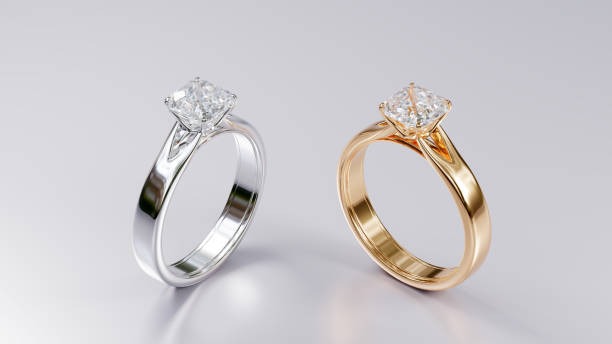
Choosing a precious metal for jewelry is more than a matter of style. It is a decision that reflects personality, values, and a desire for lasting beauty. Gold and platinum are two absolute favorites in the world of jewelry. Each has unique properties, aesthetics, and history. In this article, we will look at the differences between gold and platinum and help you choose in favor of true elegance.
Aesthetics and Color – Which One is Closer to You
The first thing that catches your eye when choosing between gold and platinum is the color. Gold has a warm, sunny hue, especially in yellow and pink. It gives jewelry a softness and a sense of traditional wealth. White gold, popular in wedding bands, creates a more neutral, modern effect, but requires rhodium plating to maintain the whiteness.
Platinum, on the other hand, has a natural, cool, silvery-gray luster with a slight bluish tint. Its color is discreet and noble, it perfectly matches diamonds, emphasizing their purity. Platinum looks especially good on light or cool skin, while gold is more often chosen by those with warm skin tones.
Both metals are in fashion: gold is experiencing a renaissance thanks to vintage and oriental motifs, and platinum steadily holds its position among those who value minimalism and sophistication.
Strength and Wear Resistance
One of the main differences between platinum and gold is their physical strength. Although platinum is softer than some metals on the Mohs scale, it is much denser and heavier than gold. Platinum jewelry is less likely to lose weight when polished, and if damaged, the metal does not chip, but simply shifts – this allows it to retain its shape and volume.
Gold, especially in high purities (24K and 2K), is more susceptible to deformation. Jewelry is often made from 18K or 14K gold to increase its resistance to wear. However, even in these alloys, gold requires more frequent care.
If you plan to wear jewelry every day, platinum may be a more practical choice. It is durable and, over time, develops a noble patina that emphasizes the character of the piece.
Value and Investment Value
Gold and platinum prices are formed on global markets and depend on demand, reserves, and industrial applications. Gold, being a historical standard of wealth, is highly liquid. It is widely used as an investment metal, and jewelry, especially 24K, is often considered a form of long-term investment.
Platinum is less common in nature, but in recent years, its stock market value has often been lower than gold’s. However, the cost of producing platinum jewelry is higher: due to its density, the metal is more difficult to process, and it takes more material and time to make. This makes platinum jewelry elite and often more expensive, despite the stock market price.
If you are looking for a versatile investment with the possibility of resale, gold will offer more flexibility. If you want a piece with high status value and rarity, consider platinum.
Allergies, Comfort, and Hypoallergenicity
Platinum is one of the purest and safest metals for the skin. It is usually used in alloys with a content of 95%, which makes it almost hypoallergenic. It is an ideal choice for people with sensitive skin that is prone to irritation from nickel and other metals.
Pure gold is also hypoallergenic, but jewelry is rarely completely pure. 14K or 18K alloys may contain impurities that cause skin reactions. This is especially true for white gold, which may contain nickel. If comfort and safety when wearing are your top priorities, platinum is the clear leader.
Care and Maintenance
Gold and platinum require different care. Gold jewelry, especially in yellow and rose gold, requires periodic polishing. White gold loses its rhodium plating over time and takes on a yellowish tint, so it is recommended to rhodium plate it every 1-2 years.
Platinum is less susceptible to external changes, but over time, its surface develops a patina – a special coating that creates a soft matte effect. Many people value this patina for its vintage aesthetics, but if desired, platinum can be easily polished to a mirror shine.
In both cases, we recommend that you store your jewelry separately, in soft cases, and regularly contact your jeweler to check the condition of the items.
What to choose: Recommendations from Magnolia Jewelers
At MagnoliaJewelers, there is a wide range of jewelry in both gold and platinum, and we know that the perfect choice is the one that suits your lifestyle:
- If you value warmth, shine, and tradition, pay attention to gold jewelry, especially 24K. It is suitable for special occasions and romantic gifts;
- If you are looking for a metal that will emphasize your restraint and will serve for decades without losing its shape, choose platinum;
- In the assortment of Magnolia Jewelers, you will find both exquisite wedding rings and platinum earrings, as well as gold pendants, bracelets, and rings with precious stones, for every occasion and taste.
Final Thoughts
Gold and platinum are not competitors, but two different paths to true elegance. Gold offers warmth, brightness, and versatility. Platinum – durability, discreet shine, and status. The choice between them depends on what you are looking for: a family heirloom, a symbol of love, or an item that reflects your style. In any case, with jewelry from Magnolia Jewelers, you will get beauty and confidence in quality and durability.