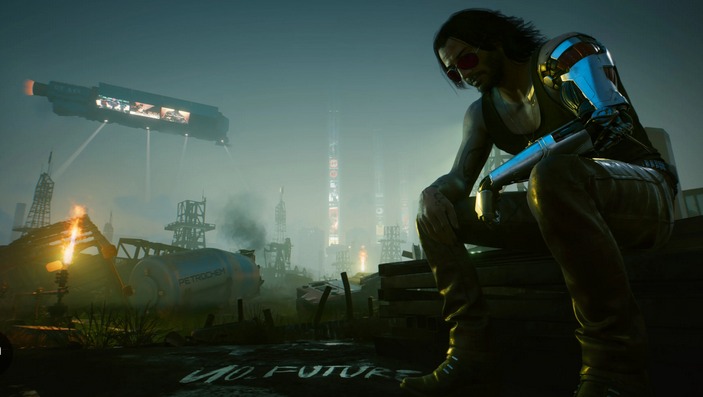
So when you launch Cyberpunk 2077 you’re greeted with this sprawling neon city, stunning characters, and a world that pulsates with detail. Then you pick up your favorite mobile shooter and its focus is on instant loads, snappy controls, and the smooth UI. Pretty different experiences, right? And yet, these two games share a surprisingly uncanny common thread: the support of a game art outsourcing company. Just like the quiet heroes who fix your coffee machine or microwave without asking for applause, these art outsourcing studios work behind the scenes to deliver flawless visuals, whether for blockbuster titles or fast-paced mobile shooters.
The Repairman Analogy: Quiet Experts at Work
Think for a moment about the last time something in your house was repaired. It may be a blender, a boiler, or even the internet router. Somebody comes with a toolbox, troubleshoots the problem in no time, and leaves your gadget working better than before. You never get to see the training, the knowledge of that field, nor do you perceive its years of experience; they get the job done. Game art outsourcing companies operate similarly. Studios leverage their expertise to render visuals without having to build everything in-house. Be it character modeling, environment design, VFX, or any other niche or discipline, these crews plug into a production like skilled technicians and quietly power some of the most beloved visual experiences in games today.
The Same Engine Under the Hood
Cyberpunk 2077 and a casual mobile shooter live on opposite ends of the gaming spectrum, but both require assets that look great, run smoothly, and fit their respective gameplay styles.
In AAA games, the requirements often include:
- Ultra-detailed 3D environments with complex geometry and high-resolution textures
- Nuanced facial animations driven by motion capture or hand-keyed precision
- Cinematic cutscenes with film-like lighting and camera work
- Realistic materials and effects, from leather jackets to glowing neon signs
In contrast, mobile shooters focus on:
- Optimized designs that maintain visual clarity without overwhelming the device
- Clean silhouettes that support fast-paced gameplay and quick character recognition
- Punchy UI elements that are intuitive, responsive, and thumb-friendly
- Lightweight asset creation, ensuring fast load times and smooth frame rates
Despite the different scales, both types of games rely on a similar backbone: specialized artists and designers. These include:
- 3D modelers, crafting characters, weapons, and environments
- Texture and material artists, giving surfaces depth and realism
- Animators, breathing life into movement, from reloads to idle loops
- UI/UX designers, making sure every interaction feels right and looks good
And here’s the catch: many of these professionals aren’t part of the in-house development team. They operate within outsourcing studios — dedicated external teams located worldwide. These studios are built for agility. They can scale up to meet the demands of a massive open-world RPG or pivot to deliver stylized assets for a mobile shooter efficiently.
Whether it’s building a grungy jacket for a cyberpunk rebel or designing a glowing alien rifle optimized for mobile, it’s often the same toolkit, just applied differently. And it’s often the same kind of external creative team that powers both ends of the industry.
From Massive to Minimal: Why Outsourcing Fits All Sizes
One of the core reasons outsourcing is so prevalent, both in AAA and mobile, is flexibility. Developers can rapidly onboard highly skilled professionals for specific tasks without the overhead of hiring full-time staff.
Need a lifelike NPC crowd for a cinematic scene? There’s a team for that.
Want a library of stylized props for your mobile arena? There’s a team for that, too.
This flexibility is a significant reason studios turn to partners like N-iX Games, who specialize in full-cycle game art production, covering everything from concept to polish. With years of experience in both large-scale projects and smaller titles, studios like this understand how to tailor workflows to fit the need, not the budget.
The Global Studio Network
The world of game art outsourcing is massive and growing. Studios in Eastern Europe, South America, and Southeast Asia are becoming trusted long-term partners for some of the biggest game publishers. These studios are not just execution teams, they bring creative vision, technical excellence, and production maturity.
Take N-iX Games, for instance. With a footprint across Europe and Latin America, and a decade of experience under their belt, they’ve collaborated on multiple genres, platforms, and visual styles. They aren’t just a vendor; they’re part of the creative conversation, contributing ideas, refining assets, and ensuring the end product looks and feels right.
What makes top-tier outsourcing studios stand out?
- Geographical versatility: With teams across multiple continents, they offer time zone flexibility and global market insight.
- Pipeline integration: They work seamlessly with internal teams, adapting to existing tools, engines, and workflows.
- Creative contribution: Beyond asset production, they support storytelling, art direction, and gameplay feel.
- Specialized skill sets: From realistic facial animation to stylized UI design, they bring focused expertise in a range of areas.
- Cross-platform experience: These studios can easily pivot between PC, console, VR, and mobile platforms.
As a result, outsourcing partners today are not only about fulfilling a task, they’re about amplifying vision, scaling smartly, and ensuring consistency across every visual touchpoint of a game.
Invisible, Yet Invaluable
When players talk about what makes a game great, they rarely mention the texture of a character’s boots or the subtle lighting in a menu screen. But they notice when those things feel wrong. The job of game art outsourcing studios is to make sure those details feel right, even if they go unnoticed.
Much like the repairman who doesn’t ask for praise after fixing the heater, art outsourcing teams tend not to seek the spotlight. But their fingerprints are all over the games we love, from the smallest mobile shooters to the most anticipated AAA blockbusters.
Conclusion
It doesn’t matter if you’re creating the sprawling dystopia of a console game or the addictive feedback loop of a mobile shooter; it all comes down to the visuals. Responsive buttons. Satisfying looking guns. Immersion-inviting environments. And all of that, most probably, you are not doing by yourself. You are asking for help, just as you would call someone to repair the refrigerator. And that help comes most frequently from specialized game art outsourcing companies.
So the next time you run through the streets of Night City or are battling it out in your favorite mobile arena, do remember that behind those pixels are ‘quiet professionals’ (artists, designers, animators), working from studios like N-iX Games, pouring their craft into every frame They are the invisible hands, the silent heroes. And whether you play for ten minutes or ten hours, they’re there helping make your world feel alive.



