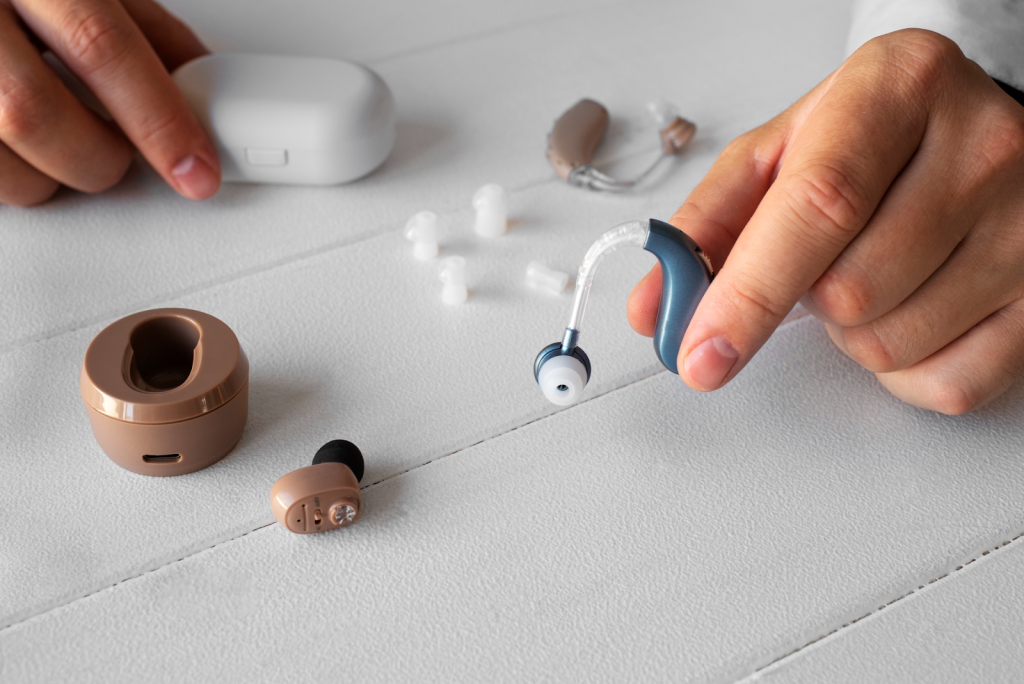
There is no one-size-fits-all hearing aid. Different users require different types of hearing aids, depending on user lifestyle, level of hearing loss, preferences, or even user anatomy. From powerful behind-the-ear hearing aids to minute and invisible ones, there is a category that is suited for everyone.
Are you looking for the hearing aid category that is most suitable for you? This guide has got you covered. It covers the main types of hearing aids, their working, which is the best for which user, and so on, all of which can help you make an informed decision.
What Are The Main Categories Of Hearing Devices?
Hearing aids generally come in four most common and well-known categories. They are as follows:
- Behind-the-Ear (BTE)
- Receiver-in-Canal (RIC)
- In-the-Ear (ITE)
- In-the-Canal (ITC) / Completely-in-Canal (CIC)
This guide will help evaluate which hearing aid type is suited for which user.
Behind-the-Ear (BTE) Hearing Aids
Behind-the-ear hearing aids (BTE) are the most well-known and commonly available hearing aids. These are hooked over the top of the earlobe and rest on the back of the ear. Many of these types of devices are connected to the ear with a tube. The earpiece is customised to fit the user’s ear canal.
These hearing aids are suitable for all age groups as well as most degrees of hearing loss. A key benefit of the BTE is that it is generally extremely durable. It also comes with a rechargeable battery, which often boasts a long battery life.
Receiver-in-Canal (RIC) Hearing Aids
The receiver-in-canal (RIC) devices are similar to the BTE, with one major difference. The receiver sits in the ear canal and is connected by a tiny wire to the piece that fits behind the ear.
These hearing aids are more discreet than the BTE, making them look almost invisible. They are also more lightweight in comparison to the BTE.
These are known to provide great sound amplification qualities for people suffering from mild to moderate hearing loss.
With all the comparisons to BTE, let’s create a difference log for these two types of hearing aids:
| Factors in Choosing | Behind-the-ear Hearing Aids | Receiver-in-canal Hearing Aids |
| Hearing Loss Severity | Suitable for severe hearing loss | More suitable for mild to moderate hearing loss |
| Lifestyle and Preference | For preference of durability and power | For preference of a more discreet appearance |
| Comfort and Dexterity | Helpful for those requiring a more robust device | Helpful for those seeking more comfort |
Table 1: BTE vs. RIC
In-the-Ear (ITE) Hearing Aids
The In-the-Ear (ITE) hearing aids are available in two styles, based on your custom-fit needs. The first style, the full shell, fits entirely in the outer ear bowl. Alternatively, the half shell covers the lower part of the outer ear bowl.
These are suitable for people with mild to more serious hearing challenges. They are also easier to put on and remove than the smaller models, such as the RIC.
A huge benefit of this type of hearing aid is that it is suitable for users who face difficulties in tasks that require fine motor skills.
ITC And CIC Hearing Aids
In-the-canal (ITC) devices can fit completely within your ear, making them practically invisible to an outsider.
Completely-in-Canal (CIC) devices are similar to ITCs. However, their specialty is that they fit even deeper within the ear. They are the hearing aid types that are the closest to being completely invisible.
Their size makes them a bit challenging to handle, but they can be greatly beneficial to users with mild hearing loss. Their practical invisibility makes them ideal for the youth with a social lifestyle.
Hearing Device Types And Their Benefits
Having discussed the four major hearing aid device types, it can be a suitable decision to reiterate them in the form of a tabular representation:
| Type | Suited For | Discretion | Handling | Benefits |
| BTE | All ages, severe loss | Not discreet | Easy | Durability, power, reliability |
| RIC | Mild to moderate loss | Discreet | Moderate | Sound quality, comfort |
| ITE | The elderly, moderate loss | Medium discretion | Easy | Custom fit, large buttons, and controls |
| ITC/CIC | Mild loss, youth | Completely discreet | Difficult | Invisible to outsiders |
Table 2: Hearing Device Types and Benefits
What To Consider Before Choosing A Hearing Device?
The first aspect to consider when selecting a hearing device is the advice of your audiologist. Other than that, the following are some key aspects to consider in your choice of hearing aid:
- Your level of hearing loss will determine the type most suitable for you.
- Your lifestyle and how often you meet people will be key to choosing a more discreet hearing aid.
- Your comfort and your ease of motor skills will also determine your choice of hearing aid device.
- Levels of maintenance and the battery duration will be important to consider which hearing aid device you will choose.
Choosing a Hearing Device? Here is What to Remember
Choose the best hearing device for you today! Here are the steps to follow to ensure that:
- Undertake a professional hearing test as soon as you can.
- Assess your daily needs and what devices you want to go with them.
- Consider the levels of comfort and discretion that you need.
- And do not forget to compare device types and battery options!
Say Hello To Great Hearing With The Right Aid
The right hearing aid choice is an important choice for you to make. What conditions do you need to keep in mind for the choice? Your level of hearing loss, comfort, and the robustness that you seek from your hearing aids should all be considered in the choice. However, you should always consult an expert before making the final choice.