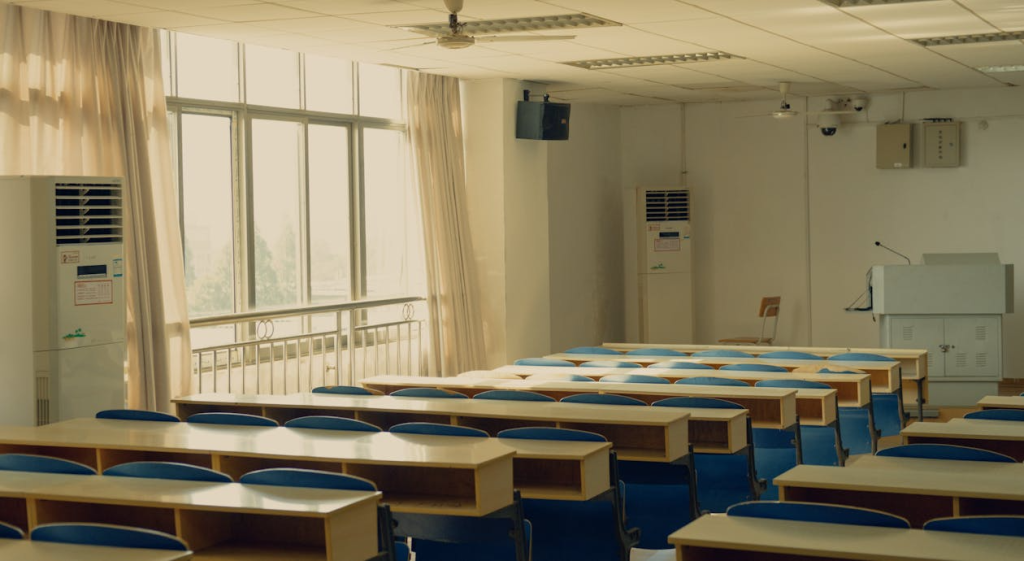
That is what is changing the way students learn. For generations classrooms have been filled with rows of desks all facing the front of the room. However… That archaic setup doesn’t work for learning anymore.
Students need spaces that work with different teaching styles and activities. Furniture that moves with them, instead of hindering them.
The good news?
Transitioning is a lot easier than most teachers think possible. In fact, the evidence is in, and it is undeniable.
Here is a quick overview of what you will learn:
- Why Traditional Classroom Setups Are Holding Back Students
- What Studies Show about the Impact of Flexible Furniture on Learning Outcomes
- The Top Essential Features to Look for in Flexible Furniture
- How to Get Started With Your Own Classroom Transformation
Why Traditional Classroom Setups Are Holding Back Students
Take a moment to think about what a ‘typical’ classroom looked like 30 years ago.
Rows of fixed desks bolted to the floor. Hard plastic chairs. Everyone facing the front. Sound familiar?
That design was built for a teaching environment that was all about the lecture. But education has evolved since then. Today’s classrooms need collaborative spaces, breakout areas, and room for interactive and hands-on learning.
The traditional setup is limiting and creates problems.
Students get restless sitting in rigid chairs all day. Group work is more awkward when students can’t easily move their desks. Different learning styles go ignored completely.
That is why investing in quality school furniture options matter more than ever.
The right pieces support every type of learner. Teachers are then able to focus on inspiring and motivating students without the equipment getting in the way.
If you are not convinced yet… Check out the research that is in:
What Studies Show about the Impact of Flexible Furniture on Learning Outcomes
If you are still sceptical that the furniture can make a difference to learning outcomes, hold on to your hat.
A study conducted by The University of Salford found that well-designed classrooms have the potential to improve student progress by up to 16% in just one academic year. The same research showed that flexibility and student choice accounted for a whopping 25% of that gain.
Pause for a moment.
Adjusting the physical environment alone can help with academic performance by double digits. No need for a new curriculum or to hire more staff.
Pretty powerful, right?
The evidence doesn’t stop there. Flexible furniture also helps with:
- Collaboration: Students work together in a more natural way when the furniture moves easily and the classroom space can be reconfigured in an instant.
- Engagement: Choice over seating and layout boosts student motivation and focus.
- Behaviour: Students that need to move around constantly have the appropriate outlets.
- Supporting all learners: Different set-ups can accommodate a variety of learning styles and teaching approaches.
The National Center for Education Statistics also found that 78% of teachers and educators believe that flexible learning spaces have a positive impact on students’ learning outcomes.
78%!
There is no better endorsement than an overwhelming agreement from the people who spend every day in classrooms and see the evidence with their own eyes.
The Top Essential Features to Look for in Flexible Furniture
Not all flexible furniture is created equal. Certain characteristics make the difference between genuinely transforming a classroom and throwing away money.
It is important to understand these key features so schools can make smart investments.
Mobility and Adaptability
Furniture needs to be easy to move around quickly and quietly.
Rolling chairs or tables with lightweight materials allow teachers and students to reconfigure spaces in minutes. This makes it easy to transition between lectures, group work and independent study without disruption.
Pieces that combine easily into different formations help support a variety of learning activities. Tables that group together for projects. Stackable chairs to open floor space. Storage units that can double as room dividers.
Ergonomic Design
Comfort is a big deal for student concentration.
Uncomfortable furniture makes it difficult for students to focus. Constant fidgeting in unsupportive chairs is distracting. Ergonomically designed pieces reduce fatigue and keep students more focused.
Look for adjustable height options, flexible back support, and cushioned seats.
Durability and Quality
Cheaper furniture options look appealing at first glance but end up costing a lot more over time due to having to constantly replace them.
Quality furniture withstands years of hard use while still maintaining their appearance and function.
Look for solid construction, wipe-clean surfaces and solid warranties. That investment pays off when a piece of furniture lasts a decade instead of a year.
Storage Integration
Storage is one of the most important parts of classroom furniture.
Pieces that have built in storage help keep spaces more organised and clutter free. Students can access materials easily and teachers spend less time managing chaos.
Look for furniture that serve multiple functions. Chairs with hidden compartments. Tables with integrated shelving. Mobile storage units that double as a workstation.
How to Get Started With Your Own Classroom Transformation
Classroom transformation is not an ‘all or nothing’ situation.
Smart planning means flexibility is attainable in schools of all sizes. Sometimes it can be effective to start small and scale up over time. Massive changes can end up overwhelming and falling off track.
Assess Current Needs
Start by observing how the existing space is currently used.
Where are the bottlenecks? What activities or lessons have problems with the current furniture set-up? Which students appear most affected by the current set-up?
Make notes and try to highlight priorities. Do group activities really suffer the most? Are specific students in dire need of movement options?
Understanding these needs will help to guide smart purchasing decisions.
Prioritise High Impact Changes
Some changes make more of a difference than others.
Replacing non-mobile seating with easily movable chairs and tables can create the most impact. Experimenting with a few alternative seating options can completely change student engagement almost instantly.
Look to address the most obvious issues first, then build on that as budget becomes available.
Involve Teachers and Students
The teachers and students using furniture on a daily basis are the most useful resource.
Teachers are best placed to know which activities suffer most from the current set-up. Students are also great at articulating what type of furniture and set-ups help them learn best. Their input can help inform decisions that work well in practice.
Pilot schemes in a few individual classrooms are a great way to test out some of the ideas before rolling them out on a larger scale. Success stories from colleagues can then be used to build support for wider changes.
Plan for Flexibility
Planning for flexibility might sound like an oxymoron but requires some thought.
Consider how a space might need to change over time. Aim to pick furniture that can adapt to different teaching styles and learning activities. Avoid locking the classroom into single purpose furniture that will limit the range of future options.
The end goal is to create learning spaces that grow and evolve with educational needs.
Wrapping Things Up
Flexible classroom furniture is one of the single most effective ways to invest in students and schools.
The research shows it clearly. Appropriate furniture improves learning outcomes, boosts engagement and supports modern teaching methods. All while creating a more comfortable learning environment for students and teachers.
The traditional classroom set up was great for its time. The problem is that time has moved on.
It is high time that furniture moved with it.
Embracing flexibility is how schools can give students the real advantages they need. Better collaboration skills, improved focus, and enhanced learning outcomes.
The transformation does not happen overnight. But it is not as far off as most teachers think either.
With the right planning and careful purchases any classroom can become a dynamic environment where students can thrive.
The question is not whether flexible furniture options work.
The research has settled that debate.
The question is how fast can schools adapt to provide students with the learning environments they deserve.