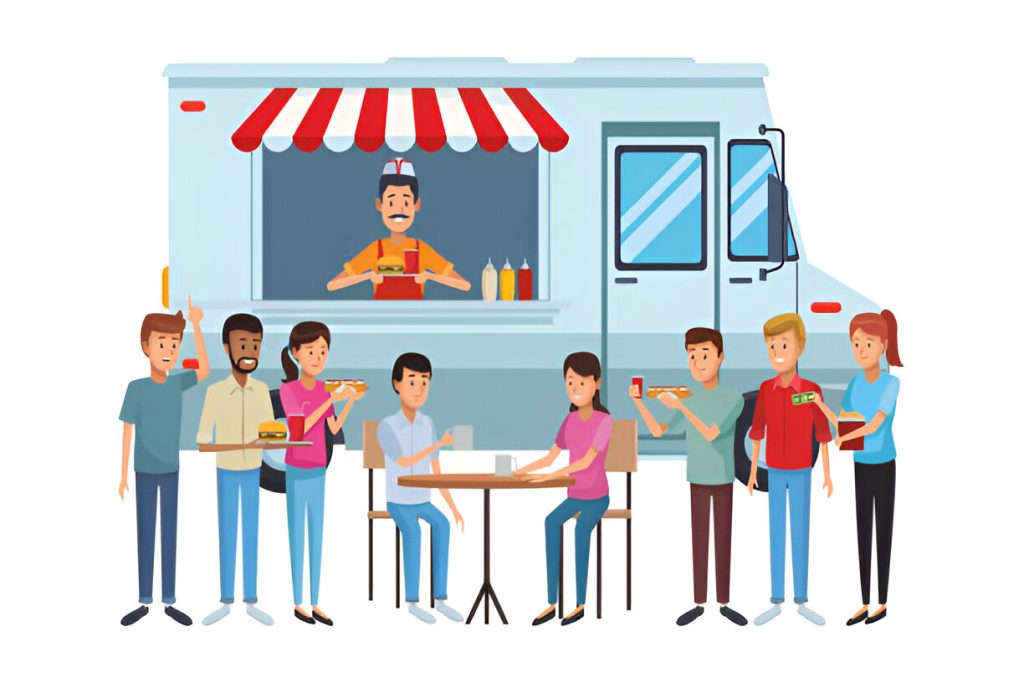
Picture this: you’re walking down a busy street when you spot a food truck with a line stretching around the corner. Without knowing what they’re serving or checking reviews, something compels you to join the queue. This scene plays out daily in cities worldwide, from bustling New York corners to trendy Melbourne laneways, and it’s no accident. The formation of food truck lines taps into deep-seated psychological triggers that influence our decision-making in ways we rarely consciously recognize.
The Social Proof Phenomenon
The most powerful psychological driver behind food truck line formation is social proof—our tendency to look to others’ behavior to guide our own decisions. When we encounter a long line at a food truck, our brains automatically interpret this as a quality signal. After all, why would dozens of people waste their lunch break standing in line unless the food was exceptional? This mental shortcut, known as the “wisdom of crowds,” helps us identify quality options without extensive research.
Food trucks particularly benefit from this effect because they lack the permanent signage and established reputation that brick-and-mortar restaurants possess. The line itself becomes the primary advertisement, creating a self-perpetuating cycle: the longer the line, the more attractive the truck becomes to passersby, which in turn lengthens the line further.
FOMO and Scarcity Psychology
The fear of missing out plays a crucial role in queue formation, particularly when combined with the inherent scarcity that mobile food vendors create. Unlike traditional restaurants, food trucks often feature limited daily offerings that can sell out at any moment. When a food truck posts “only 50 portions available today,” it triggers an urgent psychological response that compels people to secure their spot immediately.
This scarcity mindset intensifies when we witness others already queuing. Our brains are evolutionarily wired to avoid loss more than to seek gain—a principle called loss aversion. Missing out on that acclaimed burger feels like a genuine loss, especially when we watch others enjoying what we could have had.
The Community and Investment Factor
Beyond individual psychology, food truck lines create spontaneous community formation. The shared experience of waiting transforms strangers into temporary allies, united by common anticipation. Conversations spark naturally, menu items are debated, and stories shared. Food trucks in Melbourne exemplify this particularly well, where regular gatherings at Queen Victoria Market create predictable social spaces where waiting becomes a social ritual that connects people through their shared appreciation for innovative cuisine.
Once we’ve committed to standing in line, another psychological mechanism kicks in: the more we invest in waiting, the more we value the outcome. This cognitive bias means that a taco requiring twenty minutes of waiting will taste better than an identical taco obtained immediately. Our brains adjust our perception of the experience to match our investment, making us predisposed to evaluate the experience positively.
Key Takeaways
The psychology behind food truck line formation reveals how deeply our decision-making is influenced by social cues, scarcity, community desires, and our need to justify our investments. Food trucks have created a perfect storm of psychological triggers that make their queues irresistible.
Next time you encounter a food truck line, observe these psychological forces at play. Understanding these patterns helps us make more intentional choices about when joining that queue truly aligns with our desires versus when we’re simply following the crowd.