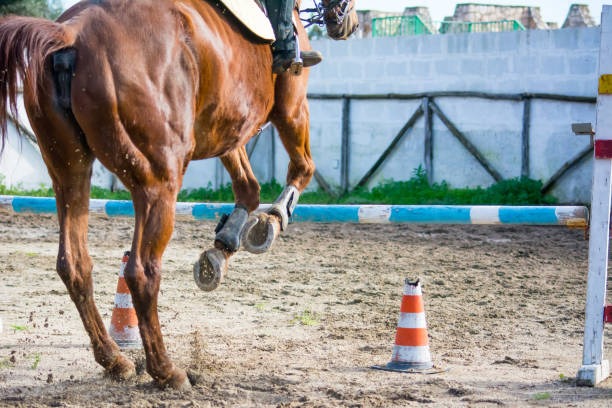
Cavaletti training is a valuable horse exercise method that offers physical and mental benefits. It involves a series of low, evenly spaced poles or rails that horses step over at various gaits. This type of training promotes balance, rhythm, and coordination while helping to strengthen muscles and improve flexibility. It’s commonly used across disciplines to support overall performance and conditioning.
Cavaletti horse jumps can enhance proprioception and joint mobility when integrated thoughtfully into a horse’s routine. These low-impact obstacles encourage a more engaged stride, helping the horse develop better posture and stride regulation. Whether used for young horses in foundational training or seasoned athletes refining their movement, cavaletti exercises provide a versatile, low-stress way to support long-term equine development.
What Are Cavaletti?
Cavaletti are adjustable horizontal poles used in horse training. Created by Federico Caprilli, they promote natural movement and help horses improve stride and balance. These exercises are essential across disciplines like dressage, jumping, and trail, allowing trainers to shape movement in various setups. Their modular design enables adaptation to specific training goals, and they can be used in groundwork, lunging, or riding sessions, making them versatile tools for comprehensive training.
Enhancing Coordination and Balance
Regular cavaletti exercises require horses to focus on hoof placement, with each step being deliberate and precise, especially when spacing or elevation varies. This training engages their bodies and minds, sharpening motor skills, promoting correct limb use, and developing rhythm. Mastery of cavaletti improves coordination, boosting confidence and athleticism in other training, whether hacking or showing. It enhances balance, self-carriage, and even movement, making horses more athletic and safer. Cavaletti work is essential where accuracy and finesse matter, like dressage, hunter/jumper, and eventing, but also useful for trail riding and western sports.
Building Muscle Strength and Flexibility
To cross cavaletti, horses activate deep muscles not always used in flatwork, including muscles along the topline, core, croup, and hindquarters. This strengthens muscles, enhances stability, develops flexibility, and improves joint movement. Cavaletti work boosts muscle, tone, and rehabilitation for horses of all ages and types, supporting overall health, strength, and flexibility.
Improving Gait and Rhythm
Manipulating your cavaletti configuration optimizes each gait, fine-tuning the horse’s stride for a balanced, consistent rhythm while challenging it to adjust steps as needed. This helps address issues like encouraging a bigger trot, balanced canter, or controlled transitions. Regular practice promotes organized, expressive movement and steadier tempos, strengthening rider-horse communication. Controlling rhythm during cavaletti work eases maintaining consistency in advanced exercises and competitions. For detailed riding posture and biomechanics tips, see Practical Horseman.
Mental Stimulation and Engagement
Horses, like people, thrive with varied routines. Reusing the same patterns can cause boredom, but cavaletti exercises add exciting variety, keeping both horse and rider engaged. New pole arrangements challenge horses to think and adapt, making lessons more interesting and improving focus. As problem-solving skills grow, horses become more enthusiastic. Fun, unpredictable exercises prevent sourness and resistance, fostering a willing, attentive, relaxed partner. Varying cavaletti setups stimulate curiosity and develop a well-rounded, resilient athlete eager for new challenges at home or on trail.
Preventing Injuries
Correct movement and conditioned muscles protect the horse from common injuries. Cavaletti training promotes proper biomechanics by encouraging even movement and weight distribution, enabling safe and efficient use of the musculoskeletal system. Consistent training builds strength and flexibility to support joints, tendons, and ligaments. Better balance reduces missteps, falls, and awkward movements. Elastic, well-maintained muscles help horses handle competition and long rides. Regular cavaletti work can extend the horse’s active life, enhance comfort, and maintain soundness over the years.