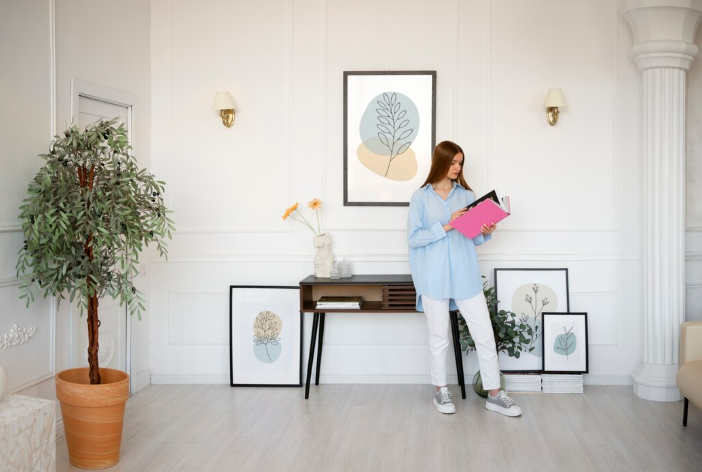
Blank walls represent untapped potential in any living space. They offer a blank canvas waiting to be brought to life with personal stories, treasured memories, and artistic flair. A carefully curated gallery wall is arguably the most effective way to inject personality and warmth into your home. Whether you are looking to brighten a dark hallway, add character to a dining room, or create a magnificent focal point above your living room sofa, a well-planned display transforms empty plasterboard into a captivating exhibition. Beyond simply filling a void, arranging your favourite visual elements can drastically alter the mood of a room, making it feel more inviting and distinctly yours.
Curating Your Collection
The secret to a truly striking gallery wall lies in the selection process. It is easy to gather every photo you own, but a more intentional approach yields better results. Start by gathering pieces that resonate with you personally. This could be anything from original paintings and family portraits to vintage posters and architectural sketches.
To keep the display visually engaging without feeling chaotic, consider the following curation strategies:
- Mix your mediums: Combine different types of art, such as black-and-white photography, vibrant watercolour paintings, and bold typography.
- Introduce varied textures: Break up flat images by incorporating three-dimensional objects like small wall planters, woven tapestries, or sculptural metal pieces.
- Maintain a common thread: Choose a unifying element to tie the diverse look together. This might be a cohesive colour palette, a specific theme, or matching frame finishes across different sizes.
- Play with scale: Anchor your display with one or two large statement pieces, then build around them with medium and smaller frames to create a sense of balance.
Taking the time to select the right combination of items ensures your wall tells a cohesive story rather than looking like a random assortment of pictures. Lay your pieces out on the floor for several days, shifting them around until the visual flow feels perfectly balanced.
Planning and Securing Your Layout
Once you have gathered your favourite pieces, the next crucial step is mapping out the arrangement. Never start hammering nails without a solid plan. The most reliable method is to trace your frames onto kraft paper, cut out the templates, and stick them to your wall using painter’s tape. This allows you to experiment with different configurations and spacing without committing to permanent holes. For particularly complex arrangements, consulting with installation experts like All About Hanging can save time and prevent costly mistakes. Aim to keep about five to seven centimetres of space between each frame, and position the centre of your overall display at average eye level, roughly 145 centimetres from the floor.
The hardware you use is just as important as the layout itself. Relying on basic adhesive strips for heavy solid wood frames or large mirrors often leads to disaster, potentially damaging both your prized possessions and your plasterboard. It is highly recommended to use sturdy wall anchors or French cleats for heavier items to distribute weight evenly.
Securing heavy pieces across a massive wall requires precision. The physical act of mounting multiple frames can be quite daunting, especially when dealing with fragile glass. Proper installation not only guarantees a flawless finish but also provides peace of mind that your curated collection will remain safely in place.
Protecting Your Artwork from the Elements
Where you choose to place your gallery wall matters immensely, particularly when it comes to environmental factors. Before finalising your layout, evaluate the natural light entering your chosen room. Prolonged exposure to sunlight can rapidly fade vibrant colours, yellow photographs, and deteriorate delicate paper fibres.
Understanding how light interacts with your art is essential. According to preservation guidelines from The Library of Congress, light damage is cumulative and follows the reciprocity principle, meaning that dim light over a long period is just as damaging as bright light over a short period. Because this embrittlement is almost always irreversible, it is vital to be strategic about placement. Avoid hanging your most treasured pieces directly opposite bright, unshaded windows. Consider investing in UV-filtering glass for your custom frames, and utilise blackout blinds during the brightest parts of the day.
In addition to light exposure, temperature and humidity fluctuations can affect your art over time. Hanging a gallery wall directly above a working fireplace or an air conditioning unit can cause wood frames to warp. High humidity environments create the perfect breeding ground for mould spores. Always try to maintain a stable, moderate climate in the rooms where your valuable pieces are displayed.
A beautifully designed gallery wall is a living, evolving display that can adapt as you collect new artwork or capture new family milestones. With thoughtful curation, precise installation, and a mindful approach to preservation, your wall will remain a stunning and deeply personal feature in your home for many years.